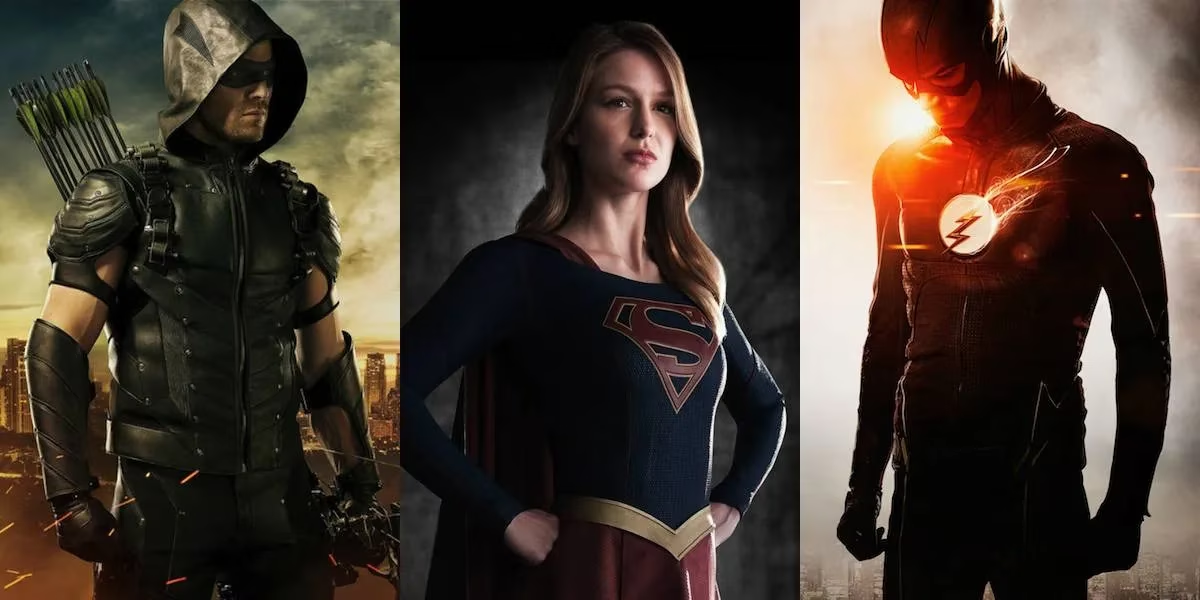
As we look at the television landscape in 2026, the legacy of DC Comics' expansion onto the small screen remains a fascinating study in world-building and audience engagement. While Warner Bros. and DC Comics have continued their cinematic endeavors, the separate yet vibrant television universes that began over a decade ago laid a crucial foundation. Shows like Gotham on FOX, The CW's interconnected world of Arrow, The Flash, and Legends of Tomorrow, and CBS's Supergirl each carved out unique spaces. The case of The CW's universe and Supergirl was particularly intriguing, as they shared a creative progenitor in Greg Berlanti yet aired on competing networks, sparking endless speculation about potential crossovers and shared continuity.
The Enduring Question of a Shared Universe
From the very beginning, fans and critics alike wondered if Arrow, The Flash, and Supergirl would ever converge. Berlanti and his team masterfully kept the door ajar, never offering a definitive answer but allowing hope to flourish. Looking back, we can trace this narrative tension to comments made at events like New York Comic-Con, where Supergirl creator and producer Ali Adler discussed the possibility. When asked about Supergirl joining the established universe of The CW's heroes, Adler noted that discussions were minimal initially, but the team remained open to the idea, stating their hope for success would bring more options. This strategic ambiguity was a hallmark of the era's television production, building audience investment through possibility.
Building a Distinct World
Unlike The Flash, which was introduced through a backdoor pilot on Arrow and featured multiple crossovers in its first season, Supergirl was tasked with establishing its own identity from the outset. The pilot and initial episodes worked diligently to construct a self-contained universe. This approach had both benefits and challenges:
-
Benefit: It allowed the show to define its own tone, themes, and character dynamics without being beholden to another series' continuity.
-
Challenge: It meant the show had to win over audiences solely on its own merits, without the immediate boost of a crossover event.
The potential for a future "mega-event" involving all three heroes was always dangled as a carrot, contingent on Supergirl achieving a level of success comparable to its CW counterparts. This business-driven reality shaped much of the early narrative decisions.
Creative Collaboration and Character Access
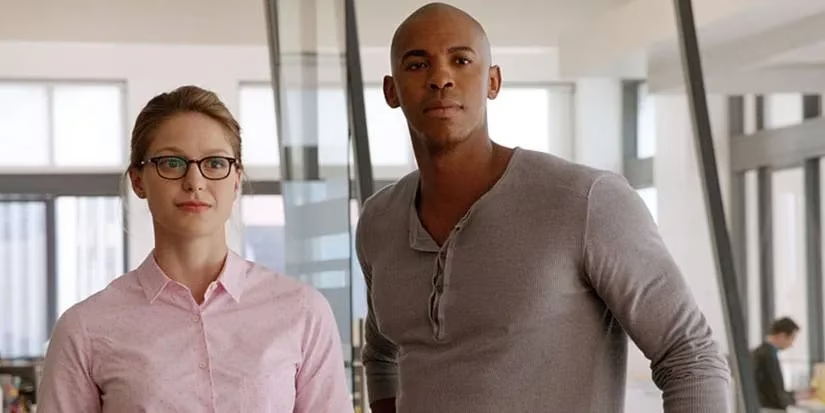
A key element in Supergirl's development was its relationship with DC Comics' creative leadership. Adler described working with Chief Creative Officer Geoff Johns as a "partnership," highlighting a generous collaborative spirit. When questioned about character usage restrictions—specifically if characters appearing on Arrow or The Flash were off-limits—Adler's correction was telling: "Couldn't use yet." This implied a fluid, long-term view of the character catalog. She emphasized the depth of DC's history, stating there was "no shortage of bad guys and women for us to take advantage of." This philosophy allowed Supergirl to populate its world with a rich array of characters from the DC pantheon.
Mining the Depths of the DC Catalog
Supergirl did not shy away from utilizing a host of DC Comics characters. From the core cast introduced in the pilot—Cat Grant, Jimmy Olsen, Hank Henshaw, and Winn Schott—to announced future appearances like Lucy Lane, Red Tornado, and Livewire, the show actively tapped into decades of comic book lore. However, the writers exhibited a strategic restraint by largely avoiding the most iconic DC names. While Superman existed as a foundational presence in the universe, he was not a regular character, a decision likely extended to other A-list heroes and villains. This mirrored a successful strategy employed by Arrow and The Flash, which also navigated restrictions on characters like Harley Quinn, John Stewart (Green Lantern), and Booster Gold.
| Show | Strategy for Character Usage | Example Characters Introduced |
|---|---|---|
| Arrow | Avoided major film characters, explored darker, street-level heroes/villains. | Deathstroke, Ra's al Ghul, Damien Darhk. |
| The Flash | Focused on Rogues Gallery and multiverse concepts, avoiding central Justice League icons. | Captain Cold, Gorilla Grodd, Vibe. |
| Supergirl | Leveraged Superman family & deep-cut aliens/tech villains, kept Superman off-screen. | Martian Manhunter, Livewire, Reactron. |
This necessity to dig deeper into the comic universe had a silver lining: it gave fans live-action portrayals of characters rarely seen on television, enriching the overall DC media tapestry. The proven success of Arrow and The Flash in this regard demonstrated that Supergirl had a clear path to becoming a similarly entertaining and beloved series by embracing its own unique corner of the DC Universe.
Legacy and Lasting Impact
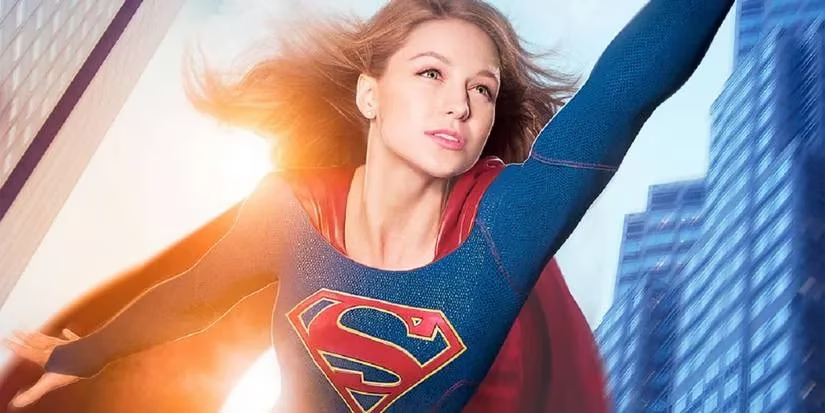
Reflecting from 2026, the journey of Supergirl and its relationship with the broader DC television landscape is a testament to evolving studio strategies and fan-driven storytelling. The initial separation allowed each series to find its voice, while the lingering possibility of crossovers created a compelling meta-narrative. The collaborative "partnership" with DC Comics executives ensured creative integrity while navigating a shared character library. Ultimately, the show's approach—building its own world while respectfully acknowledging a larger universe—set a precedent for how superhero properties can coexist across different networks and platforms. The series proved that success isn't solely dependent on interconnectedness but on strong characters, engaging stories, and a respectful yet innovative use of a legendary comic book legacy. The discussions that began over a decade ago about crossovers and shared universes have since evolved into a complex, multiversal television ecosystem, but it all started with shows like Supergirl daring to carve out their own heroic path.
Comments