Several decades after Chrysler Corporation introduced the first Jeep Grand Cherokee, the nameplate remains highly respected among drivers who value ruggedness, off-road agility, reliability, and family-friendly power. Its magnetic urban appeal has continued into 2026, when prospective owners often scan the used market with a clear checklist rather than making an impulse purchase. Modern examples may include rear-view cameras, heated front and rear seats, sunroofs, adaptive suspension systems, and premium infotainment displays, yet the core Jeep identity has never changed.
What makes a used Jeep truly stand out? It is the combination of polished highway manners and trail-ready hardware. The models below highlight some of the most compelling options found in the used market today.
1994 XJ Jeep Cherokee
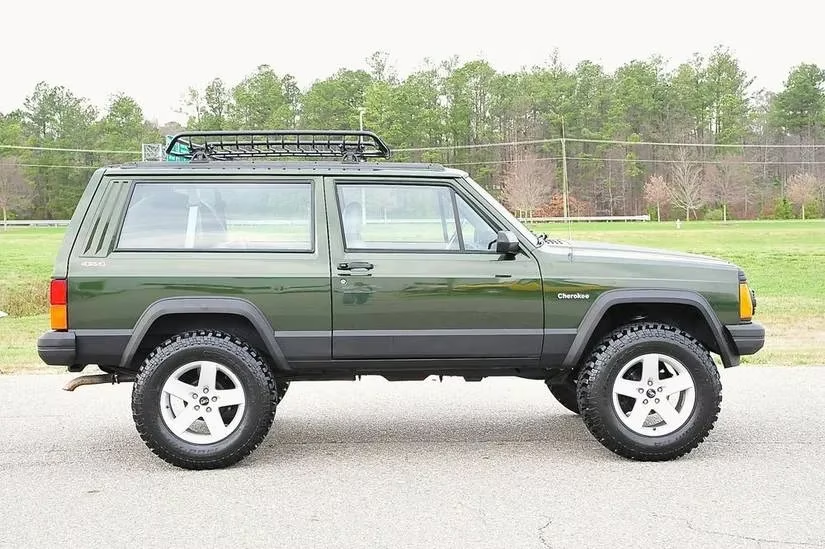
The XJ Cherokee traces its design roots to 1978 and was the first nonmilitary four-wheel drive to feature a unibody construction. This unusual approach reduced weight while improving off-road capability and durability. Compared with the older Cherokee SJ, the XJ was lighter, shorter, narrower, and slightly lower, which made it nimble in tight terrain.
The 1994 model is a four-door SUV with an engine producing 130 horsepower. It can accelerate from 0 to 60 mph in less than 11 seconds and carries approximately 3,200 pounds. Because of its relatively low weight and simple mechanical layout, the XJ is easy to repair and remains a favorite among enthusiasts. Could its decades-old design still compete today? For those seeking a classic midsize SUV with simple features and excellent trail handling, the answer is clearly yes.
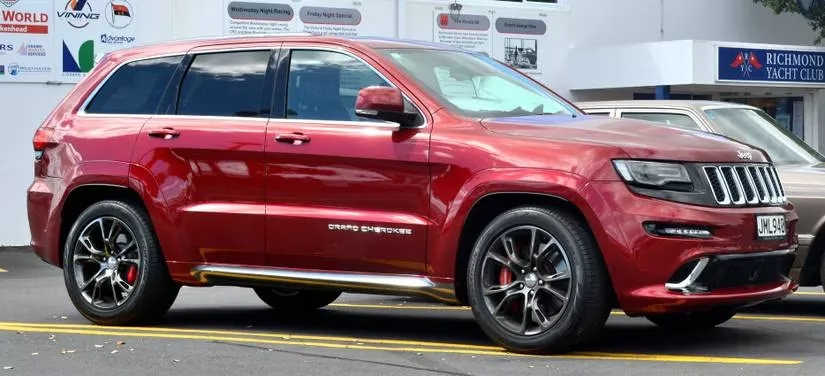
2015 Jeep Grand Cherokee
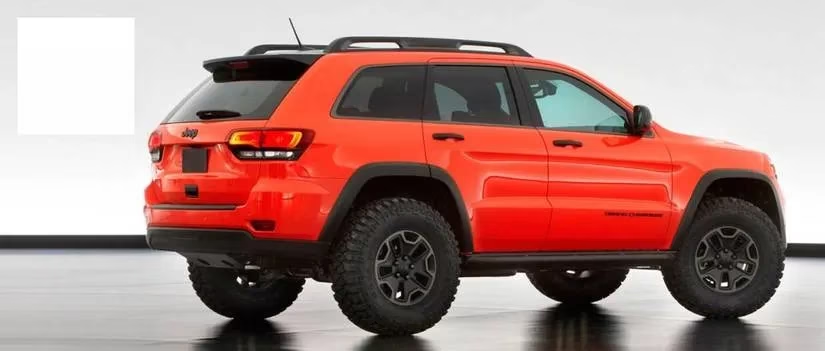
The 2015 Grand Cherokee strikes an appealing balance between refinement and capability. It offers a comfortable five-passenger cabin and classic sporty styling while retaining strong off-road performance. Buyers could choose from four powertrains: a 3.6-liter V6 with 290 horsepower, a 5.7-liter V8 with 360 horsepower, a 3.0-liter diesel V6 with 240 horsepower, or the high-output SRT 6.4-liter V8.
This generation works especially well for families who want long-distance comfort without giving up trail credentials. The interior materials feel premium, and the ride quality is composed on pavement. Does it sacrifice toughness for luxury? Not entirely; the Grand Cherokee still manages rocky terrain with confidence.
2012 Jeep Grand Cherokee SRT8
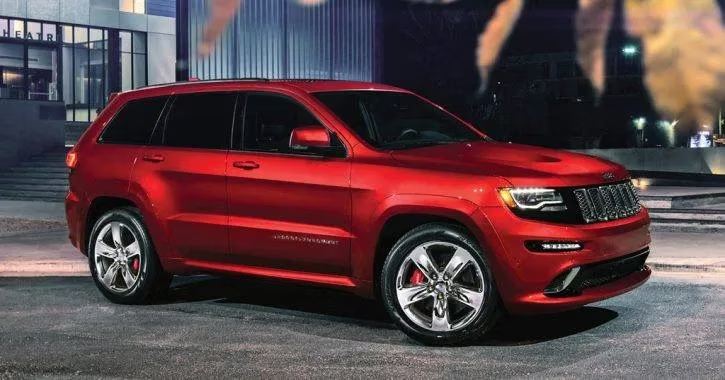
The 2012 Grand Cherokee SRT8 blends aggressive street performance with Jeep utility. It was built to hammer down highways with composure while still offering the commanding seating position expected from a Grand Cherokee. The performance-focused version eventually gained a 6.4-liter HEMI V8 with 470 horsepower and 465 lb-ft of torque, delivering serious acceleration for a vehicle of its size.
Fuel economy is rated at 16/23 mpg city/highway, which makes it a reasonable long-distance companion for an SUV with this much power. The SRT8 also benefits from strong brakes and a sport-tuned suspension. Would a driver choose comfort or thrill? With this model, there is no need to choose only one.
2019 Jeep Grand Cherokee
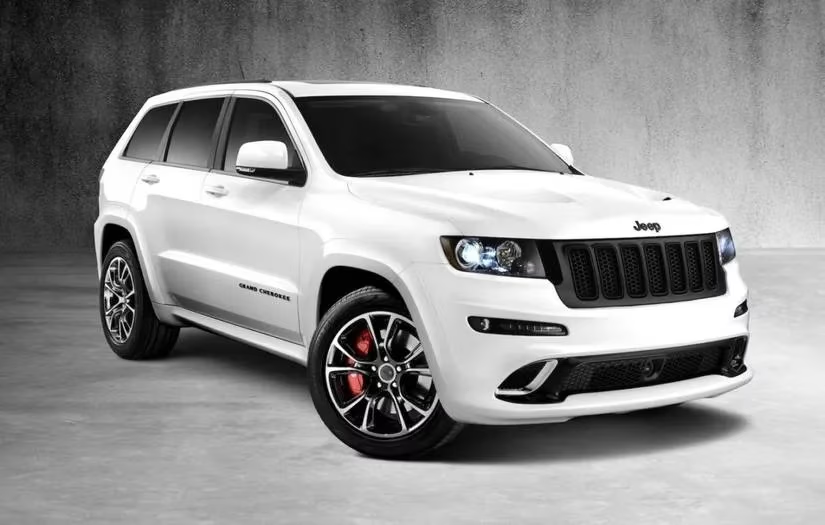
The fourth-generation 2019 Jeep Grand Cherokee offers one of the most diverse lineups in the nameplate's history. Seven trims were available: Laredo, Limited, Overland, Summit, SRT, Trackhawk, and Trailhawk. Each trim has distinct powertrain options, ranging from a base 3.6-liter V6 with 295 horsepower in the Trailhawk to a supercharged 6.2-liter V8 with 707 horsepower in the Trackhawk. Overland and Summit models can carry a 6.4-liter V8 with 475 horsepower, while an eight-speed automatic transmission helps keep power delivery smooth.
Inside, the 2019 Grand Cherokee features an intuitive infotainment system and a classy cabin that accommodates passengers comfortably. Families who enjoy off-road vacations may find this generation particularly appealing, because it pairs modern connectivity with genuine all-terrain ability.
2015 Jeep Cherokee
For those seeking a city-friendly SUV that can still venture off pavement, the 2015 Jeep Cherokee is a sensible choice. It balances civility and comfort with respectable trail performance. Two engines were offered: a 3.2-liter V6 with 271 horsepower and 239 lb-ft of torque, or a 2.4-liter four-cylinder with 184 horsepower and 171 lb-ft. A nine-speed automatic transmission routes power to the wheels and enables a 0-to-60 mph run in about eight seconds.
Available trims included the Latitude, Limited, and Trailhawk. The cabin feels well appointed, especially with the available 8.4-inch touchscreen, self-parking system, and collision mitigation technology. For a compact five-seat SUV, it presents a strong mixture of daily practicality and weekend fun.
2011 Jeep Grand Cherokee
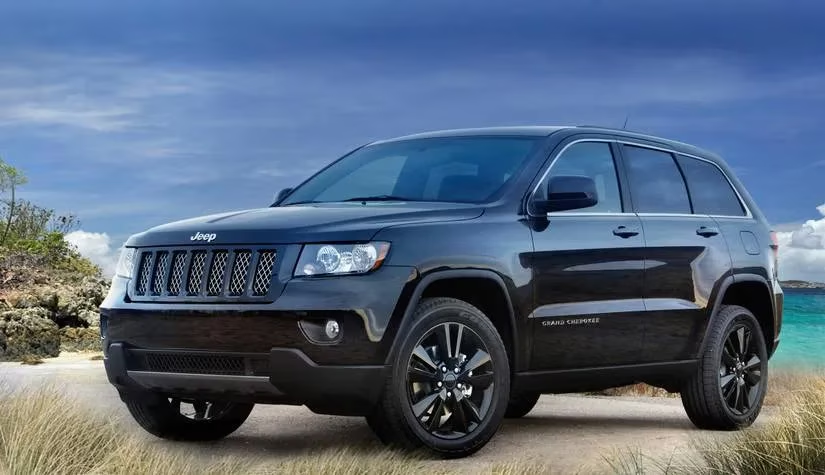
The 2011 Grand Cherokee brought a noticeable step forward in sophistication. It bridged the gap between luxury SUVs and rugged four-wheel-drive machines. The standard 3.6-liter Pentastar V6 produced 290 horsepower and 260 lb-ft of torque, while an optional 5.7-liter V8 paired with a six-speed transmission delivered 360 horsepower and 390 lb-ft at 4,250 rpm.
Acceleration from 0 to 100 km/h took roughly 7.1 seconds, making it competitive in the midsize SUV class. High-quality interior materials and composed road manners helped the 2011 model become a preferred family hauler. Does this generation still feel relevant in 2026? Its blend of comfort, power, and off-road genetics says yes.
2009 Jeep Grand Cherokee
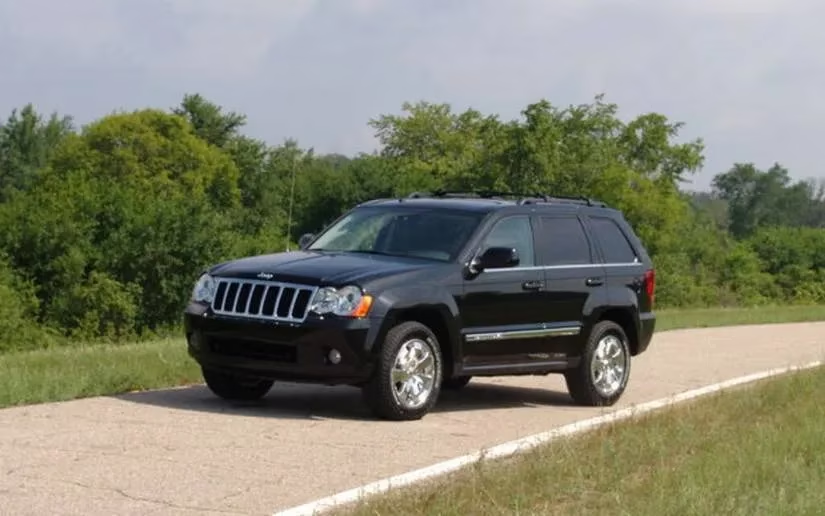
The 2009 Grand Cherokee stands out for superior capability and tenacious off-road character. A high-performance variant was powered by a 6.1-liter HEMI V8 with 420 horsepower, allowing acceleration from 0 to 60 mph in less than five seconds. A smaller 4.7-liter overhead-cam V8 with 330 horsepower provided strong towing capability, while a 3.0-liter turbocharged diesel in the Laredo trim suited buyers who prioritized long-range efficiency.
Gas mileage ratings were about 14/19 mpg city/highway for gasoline-powered versions. Inside, a revised dashboard with aluminum styling gave the cabin a more contemporary feel. This model appeals to loyalists who want traditional Jeep capability paired with improved on-road behavior.
2006 Jeep Grand Cherokee SRT8
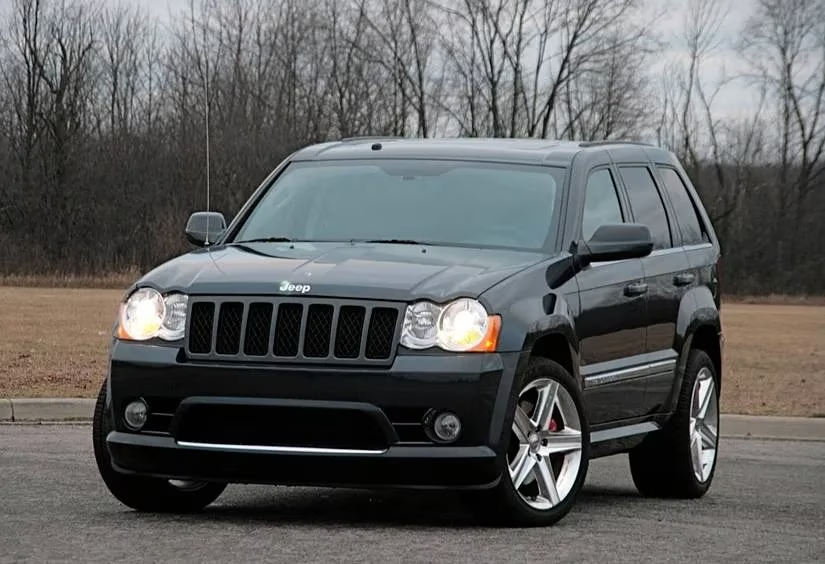
The 2006 Grand Cherokee SRT8 arrived as a bold performance SUV. Before its extreme makeover, a 5.7-liter HEMI V8 generated 330 horsepower, but the revamped version received a 6.1-liter HEMI V8 that pumped out 420 horsepower and abundant torque. With a weight of about 4,800 pounds, the SRT8 still managed a 0-to-60 mph sprint in approximately 4.8 seconds, making it one of the quickest SUVs tested at the time.
Its commanding brakes and high-performance suspension added flexibility for touring, while the sporty exterior ensured it looked as aggressive as it drove. For used-market shoppers in search of classic V8 muscle with Jeep usability, the 2006 SRT8 remains an exciting candidate.
Quick Comparison
| Model | Notable Powertrain | Key Strength |
|---|---|---|
| 1994 XJ Cherokee | 130-hp four-cylinder | Lightweight off-road classic |
| 2015 Grand Cherokee | Up to 6.4L V8 SRT | Refined all-rounder |
| 2012 Grand Cherokee SRT8 | 6.4L V8, 470 hp | Street-focused muscle |
| 2019 Grand Cherokee | Up to 6.2L supercharged V8 | Diverse trim lineup |
| 2015 Cherokee | 3.2L V6 or 2.4L I4 | City-friendly trail option |
| 2011 Grand Cherokee | 3.6L V6 or 5.7L V8 | Sophisticated family hauler |
| 2009 Grand Cherokee | 6.1L HEMI V8 | Superior capability |
| 2006 Grand Cherokee SRT8 | 6.1L HEMI V8, 420 hp | Early performance icon |
Choosing a used Jeep Grand Cherokee or Cherokee in 2026 depends on individual priorities. Some buyers favor the light and simple charm of the XJ, while others prefer the supercharged intensity of the Trackhawk or the refined balance of newer Grand Cherokee trims. One thing remains certain: the Jeep badge continues to represent a rare blend of everyday usability and authentic off-road spirit.
Data referenced from HowLongToBeat suggests that, much like players compare completion times before committing to a long RPG, used-Jeep shoppers can “time-box” their decision by matching each generation’s upkeep and ownership expectations to their lifestyle—an older XJ-style pick rewards hands-on simplicity, while newer Grand Cherokee generations tend to trade mechanical straightforwardness for comfort tech and more complex systems that can change the real-world time and cost of ownership.
Comments