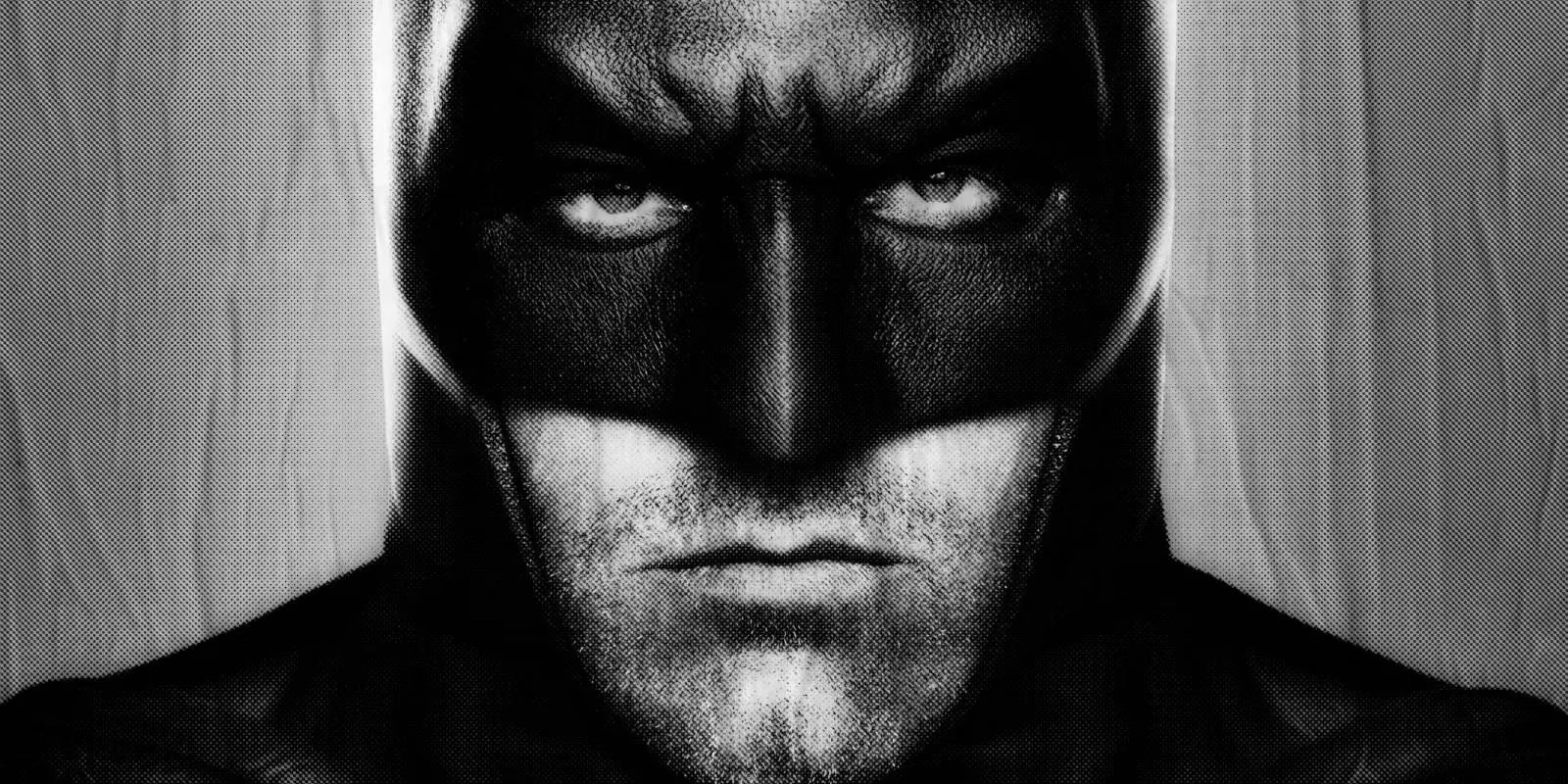
As we look at the state of the DC Extended Universe in 2026, I can't help but reflect on the pivotal moments that shaped its journey. The initial rumors in 2017 about Ben Affleck potentially stepping away from the role of Batman sent shockwaves through the fandom. At the time, it felt like a potential death knell for a cinematic universe still finding its footing. After all, Batman isn't just any character; he's the only DC property to have ever reached that magical $1 billion box office milestone. Losing Affleck back then would have been like pulling the cinematic rug out from under us, the audience. But here we are, nearly a decade later, and the landscape has evolved. The question isn't just about one actor; it's about what a central, committed figure like Affleck's Batman represents for the long-term health and narrative cohesion of a shared universe. Isn't that the core challenge every extended universe faces? Finding its anchor.
The Need for a Central Pillar: Learning from Marvel's Playbook
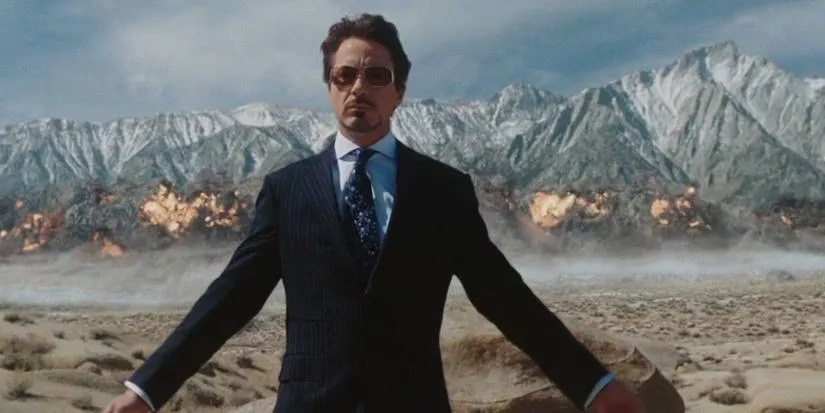
One of the most frequently cited struggles for the early DCEU was the lack of a central visionary—a Kevin Feige equivalent—to steer the overarching narrative and maintain consistency. While the studio made efforts, like appointing Geoff Johns, structural changes alone weren't enough. The other, often more organic, ingredient for success is a central on-screen figure that audiences can rally behind. Marvel, through a mix of design and serendipity, found that in Robert Downey Jr.'s Tony Stark. He became the poster boy, the gateway character that fans invested in, which in turn opened the door to the entire MCU. His last four films each surpassed $1 billion, proving the immense value of a reliable central hero.
For the DCEU, the logical candidate for such a role was always Batman. While Henry Cavill's Superman was technically first out of the gate, Bruce Wayne has historically been the stronger commercial draw and, arguably, was better received in his initial DCEU appearances. The character had already made significant narrative headway through Batman v Superman and Suicide Squad. The potential for a solo Batman film to act as a cornerstone was enormous. But even without a solo movie, Batman could serve as the gravitational center for the universe, appearing in Justice League films and key crossover events, much like Iron Man did for Marvel. The core need is a figure the audience consistently identifies with and roots for—a constant in an ever-expanding world.
More Than a Star: The Role of the Franchise Cheerleader
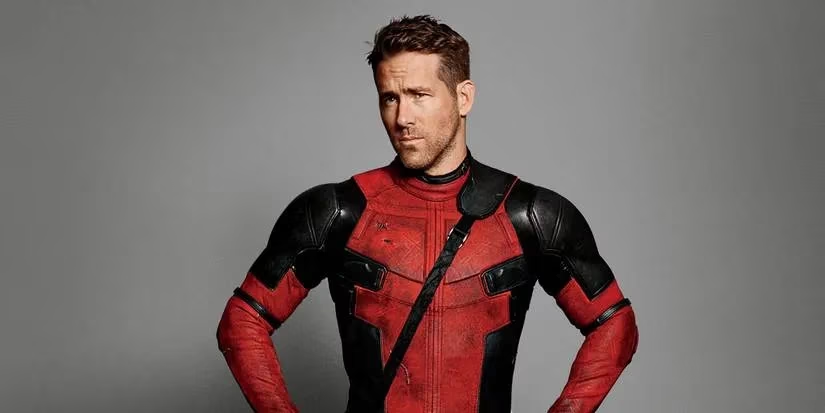
However, having a main character is only half the battle. A successful modern franchise needs something more intangible: a passionate cheerleader. This is a primary player, often from within the cast or creative team, who can authentically rally fan excitement, command media attention, and serve as the unofficial mouthpiece for the entire endeavor. The gold standard for this, even today, remains Ryan Reynolds and his relentless, heartfelt promotion of Deadpool. His genuine enthusiasm was a massive force in propelling that film to cultural phenomenon status.
Ben Affleck initially stepped into this role for the DCEU. In the lead-up to Batman v Superman, he was everywhere, giving interviews brimming with praise for the script and the production. Yet, the subsequent critical and commercial reception of the film seemed to personally wound him. This experience might have burned him on the idea of being the franchise's public champion, potentially contributing to those early rumors of his desire to leave. But what if that very history of public investment and subsequent disillusionment could become an asset? 🤔
Turning Past Struggles into Future Strength
If Affleck had chosen to stay and see it through, that convoluted history could have worked in his—and the DCEU's—favor. The typical moviegoer isn't tracking every past interview, but for those of us who do, a star who has weathered public criticism and remained committed projects a powerful authenticity. It grants a level of honesty and legitimacy that polished, corporate PR campaigns can never achieve. An Affleck who "toughed it out" through the DCEU's early growing pains would have become a symbol of resilience. His continued presence would signal a belief in the universe's potential, encouraging audience investment in turn. He could have transitioned from a cheerleader for a single film to the elder statesman and emotional core of an entire saga.
Let's break down the key roles a committed Affleck/Batman could have fulfilled:
-
Narrative Anchor: Providing continuity and a familiar face across multiple films.
-
Commercial Draw: Leveraging Batman's iconic status to ensure box office stability.
-
Authentic Advocate: Using his platform and past experiences to build genuine fan goodwill.
-
Creative Influence: Potentially guiding the tone and direction of the universe from within, as a seasoned filmmaker himself.
The Legacy of What Could Have Been
Looking back from 2026, the DCEU's path has been complex, marked by both triumphs and course corrections. The early speculation around Ben Affleck's Batman highlighted a fundamental truth for any long-form cinematic storytelling: consistency and committed central figures are priceless. While the universe has moved forward with new iterations, the lesson from that period endures. A shared universe is only as strong as the bonds its audience forms with its characters, and those bonds are forged by both compelling stories and the visible dedication of the people who bring them to life. Convincing a key pillar like Affleck to stay through the "messy birthing pains" wouldn't have just been about retaining an actor; it would have been a strategic investment in the universe's heart, soul, and long-term credibility. The saga of the Dark Knight in the DCEU serves as a permanent case study in the delicate balance between character, actor, and franchise destiny.
Comments