It was a crisp autumn morning in 2026 when the Harrison family gathered around the coffee table, laptops open, determined to replace their aging SUV once and for all. Mark and Sarah, parents to three energetic kids under ten, shared the house with Mark’s aging parents—making them a family of seven. The memories of past car-shopping mistakes still stung. Back in 2020, they had walked into showrooms believing that any large vehicle would suffice, only to learn the hard way that size on paper often meant disappointment on the road. Mark vividly remembered the day he first laid eyes on a Tesla Model X, its falcon-wing doors rising like a science-fiction bird. “How could something so advanced not be perfect for a big family?” he had wondered. But reality struck faster than a software update.
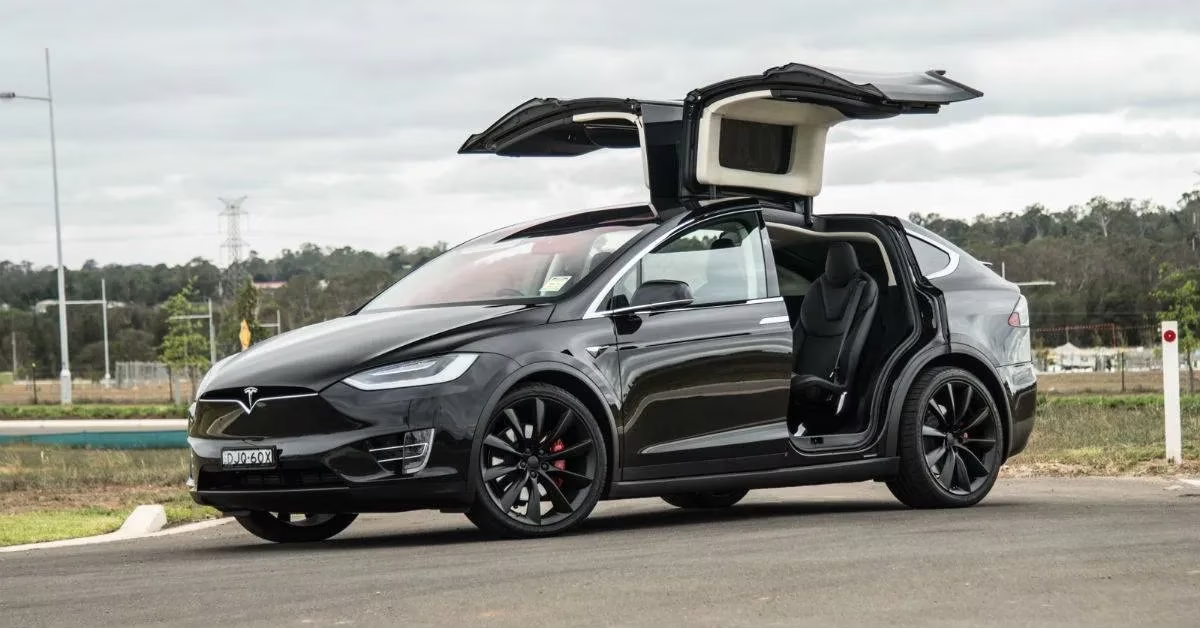
Sarah still laughed at the memory. They had piled into the Model X for a test drive, only to discover the flat-backed seats offered little adjustment and the third row forced her teenagers—then just toddlers—to sit with knees against their chests. Worse, some interior panels were misaligned, a detail that felt absurd given the price tag. “So we pay for a spaceship but get the comfort of a park bench?” Mark had grumbled. That was the first red flag, but not the last.
The Illusion of Space
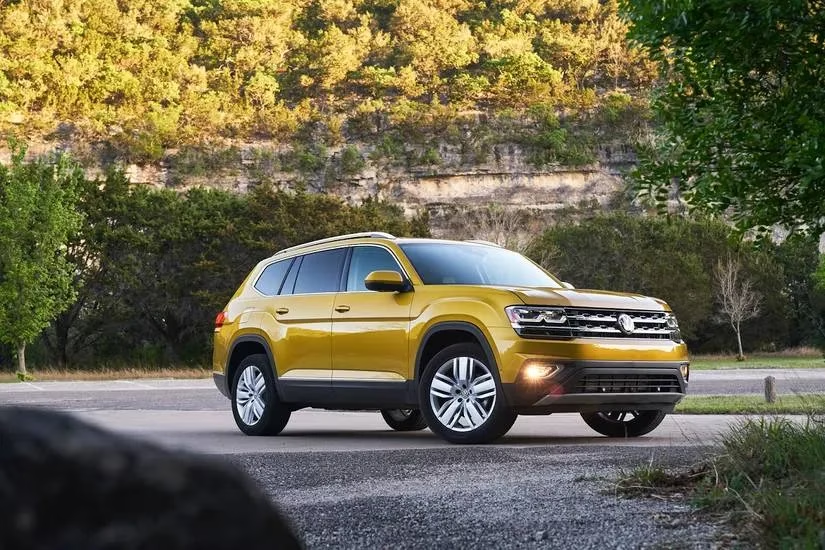
The Harrisons then turned to the 2020 Volkswagen Atlas, a vehicle advertised as the roomy savior for families. The brochure promised three rows of bliss, but the moment Mark’s father, a tall man with a bad back, tried to sit in the second row, his head brushed the ceiling. The surround-view camera—a feature they desperately needed for tight school drop-offs—malfunctioned intermittently, making Sarah nervous in parking lots. “If a car is marketed for families, shouldn’t it accommodate a dad who’s 6’2”?” she asked the salesman, who had no answer.
Their hopes sank further with the 2020 Volkswagen Tiguan. With only 12 cubic feet of cargo space behind the third row, a single stroller ate up most of it. Fold the third row, and you still had less room than a Nissan Rogue. Fuel efficiency was another letdown—Sarah calculated that the fuel bills would rival their grocery expenses. “Isn’t a family hauler supposed to carry groceries and people without a meltdown?” she mused.
When ‘Affordable’ Comes at a Cost
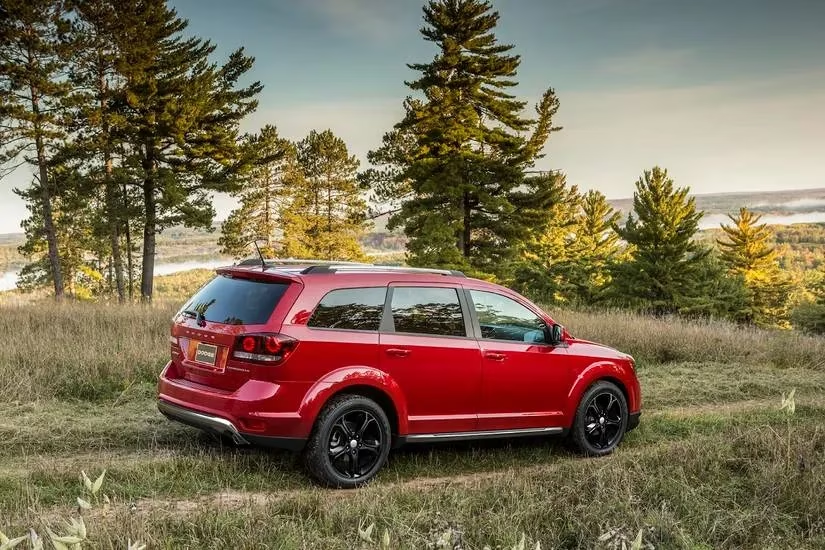
Budget realities pushed them to consider the 2020 Chevrolet Trax and the 2020 Dodge Journey. The Trax felt more like a rental car than a permanent family member: cheap cabin materials, a droning engine, and safety features so sparse that Mark joked it was “a tin can on wheels.” The Journey wasn’t much better. Its third row was so tight that even the children had to compromise legroom, and the interior screamed cost-cutting—hollow doors, a plastic shifter, and an options list so short it looked like a restaurant menu with only one dish. “You can’t add comfort later,” Sarah sighed. “What you see is what you get, and I don’t want it.”
Luxury That Disappoints
Hoping that a higher price meant higher quality, they explored the 2020 BMW X7 and the Acura MDX. The X7 oozed curb appeal, but the back row felt like an afterthought—adult passengers suffered on trips longer than an hour, and whispers of structural problems made them wary. The MDX, despite boasting comfortable seats and standard luxury features, hid a maddening infotainment system that lagged like a smartphone from 2010. The third row was acceptable only for toddlers, and the cargo area lagged behind rivals. Mark’s mother, who loved road trips, asked poignantly, “What’s the point of plush leather if my knees are up to my ears?”

The Transmission Fiasco
Just when they thought they had ruled out all the bad apples, a neighbor suggested the Chrysler Pacifica. The minivan seemed practical, but the test drive became a horror show. The 9-speed automatic transmission stumbled and hesitated like a dancer with two left feet. The adaptive cruise control overreacted to every shadow, braking sharply for no reason. Sarah, driving with a sleeping baby in the back, nearly had a heart attack. “Is it too much to ask for a car that doesn’t make me carsick while standing still?” Mark snapped. They crossed it off the list before the engine cooled.
Finding Clarity After the Chaos
After months of disappointments, the Harrisons realized that a family of seven needed more than a long spec sheet. They needed real-world headroom, a truly functional third row, reliable safety systems, and cargo capacity that didn’t force impossible choices. In 2026, they finally settled on a spacious hybrid MPV that ticked every box—not the flashiest star in the crossover galaxy, but one where every passenger could breathe, laugh, and arrive without aches. Reflecting on those misadventures, Mark said, “We were dazzled by gadgets and badges, but at the end of the day, a family car must be a rolling home, not a rolling compromise.”
Was it worth learning the hard way? For the Harrisons, every cramped test drive and every hollow door slam taught them what truly mattered: space, comfort, and peace of mind—things no amount of marketing could fabricate. And honestly, isn’t that what every big family deserves?
Comments