Ladies and gentlemen, grab your popcorn and prepare for a saga so spectacularly messy, it makes a Joker heist look like a tea party. The year was 2026, and the DC Extended Universe — the grand, glorious, and often gobsmacking attempt by Warner Bros. to build a cinematic empire — had become the ultimate Hollywood rollercoaster that critics loved to hate and audiences just could not quit. The third horseman of this apocalypse, Suicide Squad, stormed into theaters with a domestic opening weekend haul of $135 million, a figure that screamed "BAM!" louder than any Batman punch. Margot Robbie, darling of the hour, strutted out of that film as Harley Quinn with her film-star crown polished to a blinding shine, having already carried July's The Legend of Tarzan on her glitter-dusted shoulders. WB executives were popping champagne, toasting to a smash hit, while secretly sweating bullets because, well, the reviews were a dumpster fire blazing at a miserable 26% on Rotten Tomatoes. Oh, the irony was so thick you could beat the Riddler over the head with it.
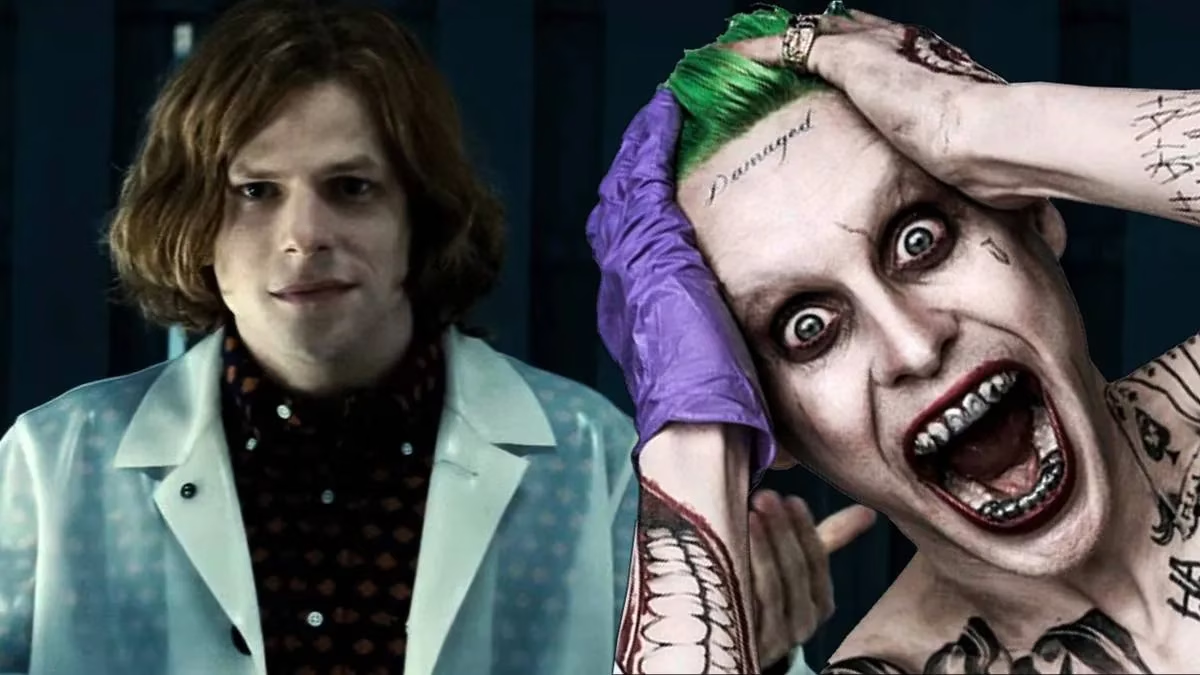
Behind closed doors, the panic was palpable. Reports swirled that China, that vast and vital treasure trove of ticket sales, was likely giving Suicide Squad the cold shoulder. But the real bogeyman under the WB bed was the creeping dread that the DCEU brand itself was built on a foundation of sand. The two prior titans, Man of Steel and Batman V Superman: Dawn of Justice, had followed the exact same script: megawatt opening weekends that fizzled faster than a firecracker in a monsoon. Critics were split, audiences were polarized, and the final box office numbers, while stacked with dollar bills, were not the mountainous piles of cash the studio needed after pouring a literal fortune into marketing these behemoths. The stench of "too dark, too grim, not fun enough" clung to everything like cheap cologne. So, what did the DCEU brain-trust do? They course-corrected so hard the steering wheel flew off. Suicide Squad, the supposed edgy bad-boy entry, was allegedly retooled mid-production to be a neon-drenched, classic-rock-blasting party, a desperate bid to capture that Guardians of the Galaxy lightning in a bottle. The result was a tonal chimera that left everyone wondering if they were watching a gritty war movie or a punk-rock music video.
The Unbearable Darkness of Being... and Why It's a Total Buzzkill
The most deafening battle cry against the DCEU was its obsession with gloom, a complaint as common and contentious as pineapple on pizza. In a world where Disney's Marvel Cinematic Universe had cornered the market on quippy, sun-drenched hero fests, the DCEU came swaggering in like a brooding teenager who just discovered Nietzsche. It was the legacy of Christopher Nolan's Dark Knight trilogy, sure, but Nolan's darkness was functional, grounded in a semblance of gritty realism. The DCEU's darkness, however, was a stylistic fetish, a full-bodied embrace of pulp origins where characters named "Doomsday" clobber each other while the soundtrack sobs with apocalyptic angst. The critics called it "angsty teenage nihilism," a symphony of macho overcompensation that was about as subtle as a bazooka.
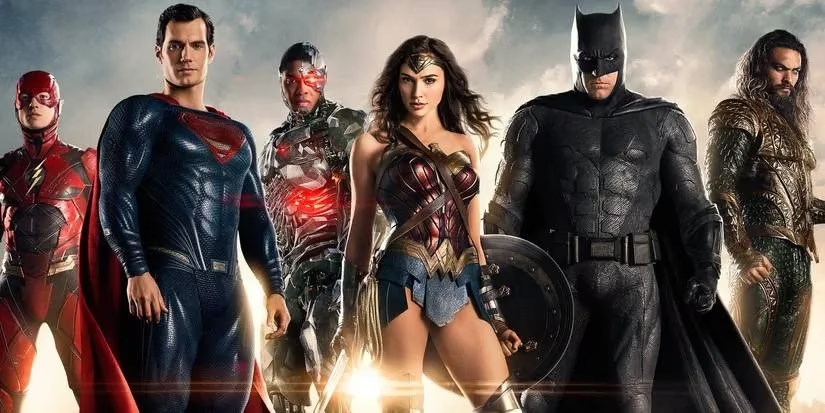
But lo and behold, a glimmer of change twinkled on the horizon. The 2016 Comic-Con sneak peek for Justice League showed Batman cracking a joke about Aquaman talking to fish, and the Flash, played by the adorably chipper Ezra Miller, begging to keep a Batarang like an excited puppy. Good grief, a joke! WB was finally signaling that the upcoming ensemble might not feel like a funeral dirge. They recognized that this film needed to be sold as a lighter affair, even if the color palette still looked like it was dipped in shadow.
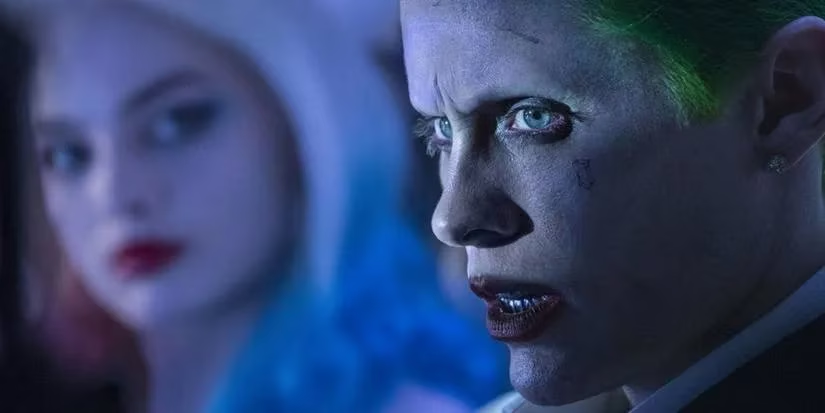
The "Only Dark" Recipe for Disaster
Here's the real gut-punch: the DCEU's problem was never that it was dark, but that it was only dark. Every beat, every hero, was hammered with the same downbeat note, leaving no room for contrast. Even Superman, the literal beacon of hope, was a morose, destructive force, a counter-punch to the pacifist Superman Returns that arguably went way too far. The grand plan was profoundly, dizzyingly reactionary. When Man of Steel didn't rocket to the stratosphere, the sequel morphed into a Batman V Superman team-up that was less a movie and more a frantic launch pad for a dozen spin-offs, complete with a Wonder Woman cameo and a clunky email sequence that practically screamed "Coming Soon!" The narrative was a labyrinthine puzzle that audiences found impossible to follow, and even harder to like. The studio's panic was so acute that they hired the marketing firm Trailer Park to re-cut Suicide Squad into something more "fun," a Frankenstein's monster stitched together to appeal to test audiences who'd adored a misleading trailer. If this compromise version also stumbled, what fresh hell awaited Justice League? More mid-shoot revisions? A last-minute recut for Wonder Woman? The DCEU wasn't a universe; it was a therapy session played out on a billion-dollar stage.
The "Dark Age" Comics Trap and the Fanboy Echo Chamber
The source material well that WB drank from was a peculiar one. While Marvel built its house on a broad tapestry of decades, the DCEU doubled down almost exclusively on the "dark age" of comics from the mid-80s and early 90s—The Dark Knight Returns, The Death of Superman. These were best-selling graphic novels that deconstructed, argued against, and grimly retooled these heroes for a cynical age. To a WB executive, it was a no-brainer: these books sold like hotcakes! But the Marvel brain-trust's secret weapon was never trivia knowledge; it was understanding how to develop characters for mass consumption. The DCEU decision-makers missed the forest for the brooding, shadow-drenched trees, ignoring the decades-long success of the lighter DC Animated Universe. They were chasing a sales spike while Marvel was building a kingdom.
And who were they building it for? The 30-to-40-year-old male fanboy. The "Kevin Smith" demographic who could be relied upon to pack theaters opening weekend, buy multiple ultimate editions, and drop obscene amounts of cash on collectibles. It's a profitable loyalty, for sure, but it also created a visual and narrative echo chamber. A side-by-side comparison of Ben Affleck's grim-faced Bat-cave tire routine and any shot of Chris Hemsworth's sparkling, chest-bare heroism in the MCU was a masterclass in sexualization aimed at straight men versus a "female gaze." The DCEU was selling a very specific brand of hyper-masculine angst, and to those outside the clubhouse, the door felt bolted shut.
The Transformers Comparison: A Beautiful Disaster?
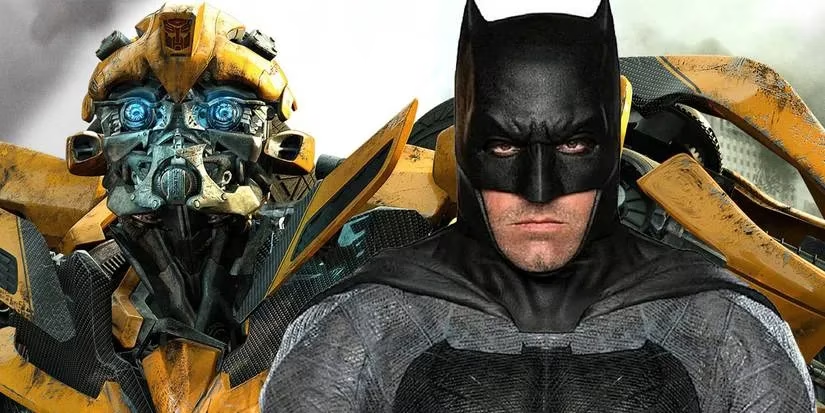
For a moment, consider the worst-case scenario: the DCEU could become the next Transformers franchise. Think about it—a critically mauled juggernaut that everyone claims to hate but that still rakes in over a billion dollars globally. Two of the four films crossed that magic mark. It's a series almost no one "likes" without a metric ton of ironic detachment, yet the ticket sales keep rolling. For a studio, that's a compelling argument that terrible reviews and decades of fan disappointment are a worthwhile price for mountains of cash. Is that the DCEU's destiny? To be the high-quality Transformers—the rival studio's crowdfunded disappointment?
Wonder Woman: The Unlikely Savior
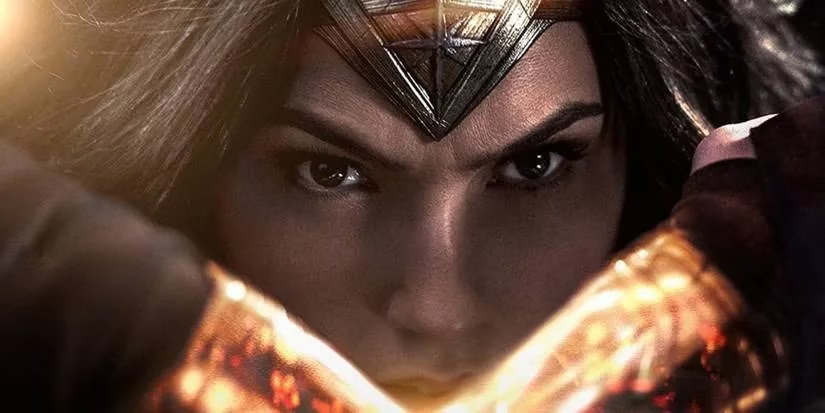
By 2026, the future of the entire shebang rested on the golden shoulders of Wonder Woman. A character who had never had a solo film, starring Gal Gadot—an actor who had never headlined a blockbuster—and a director whose last superhero attempt had not panned out, but who carried a stronger critical reputation than Zack Snyder or David Ayer. It was the ultimate wildcard. Could this Amazonian epic be the DCEU's salvation? For a universe that had been a breathtaking high-wire act over a pit of screaming critics, it was anyone's guess. With movies like a James Wan-directed Aquaman and a Rick Famuyiwa-helmed Flash waiting in the wings, fans could only hold their breath and pray to the old gods and the new that this beautiful disaster of a shared universe would somehow, miraculously, stick the landing.
Comments