Deep in the Texas heat, a Toyota Tundra rolled out of San Antonio not as an import pretender, but as an American workhorse with a Japanese badge. The full-size pickup that first appeared in 2000 had, by 2021, spent more than a decade proving itself in the second generation that launched for 2007. Even in 2026, a used 2021 Tundra still commands respect. Why? Because it remains a different kind of American truck—one built in Texas, powered exclusively by a V-8 engine, and wrapped in a reputation for reliability.
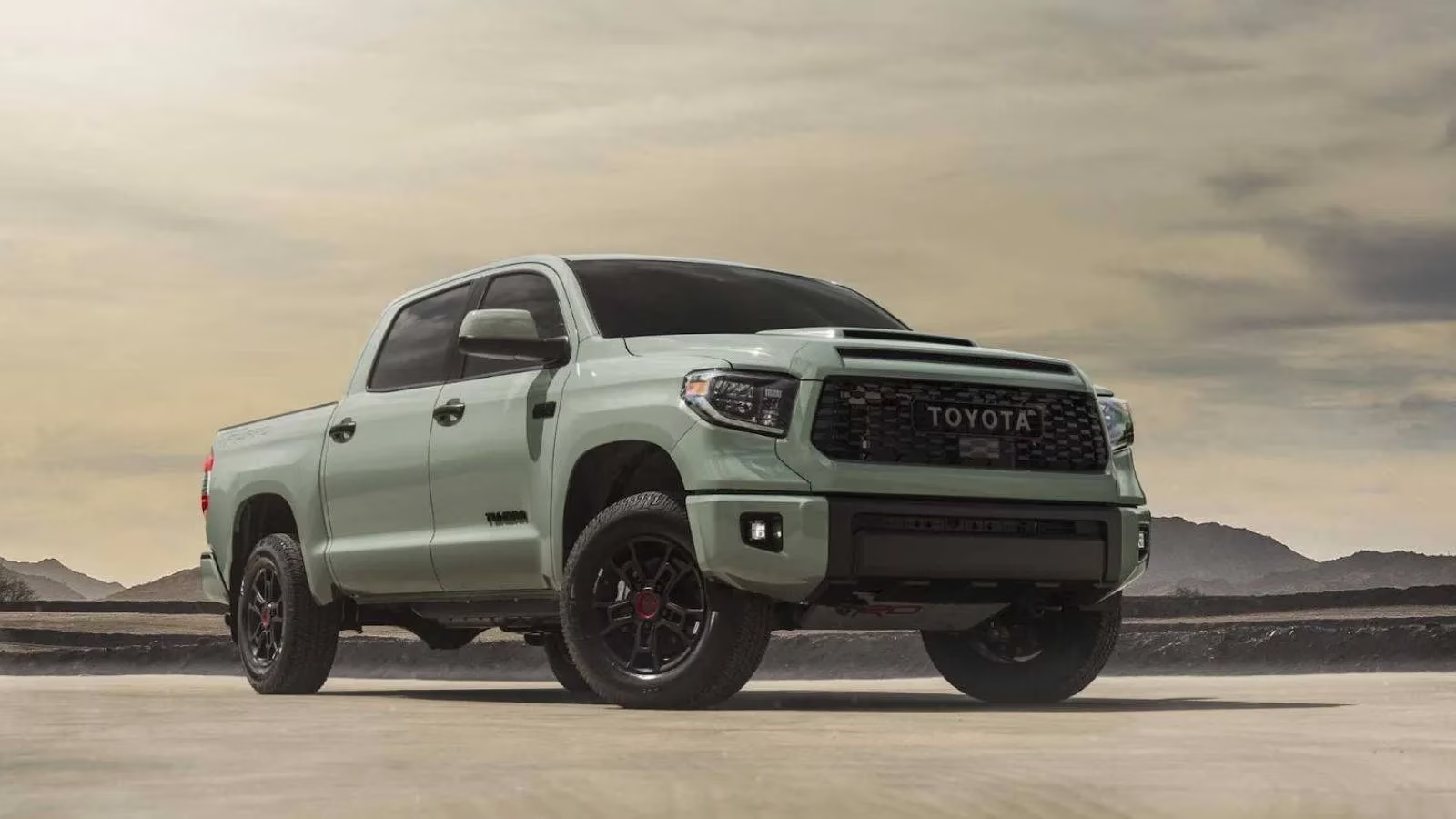
At the time, the truck started around $35,000. That price made it accessible for buyers who wanted a safe, reliable pickup without stepping into luxury territory. Autotrader noted that cheaper trim levels were good enough for most customers—safe, reliable, and powerful enough to get most jobs done. But the real story lived under the hood.
A Powertrain That Refused to Apologize
The 2021 Tundra did not chase efficiency trends. It leaned into old-school muscle. Beneath the hood sat a 346 cu.-in. i-FORCE 5.7L V8 engine producing 381 horsepower and 401 lb-ft of torque. A six-speed automatic transmission handled shifting, while the standard Tow Package made serious work possible. The truck's rear-wheel-drive foundation gave it predictable handling, and all eight cylinders delivered a confident shove whenever the driver pressed the pedal.
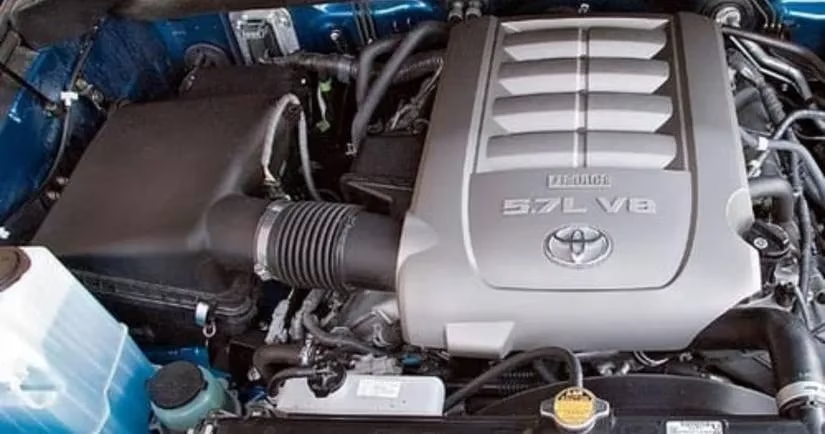
Could a V8-powered pickup still make sense in 2026? For anyone who towed heavy trailers or simply loved effortless torque, the answer was a firm yes. The Tundra's heavy-duty towing character remained its greatest charm.
Interior: Spacious, Practical, and Slightly Puzzling
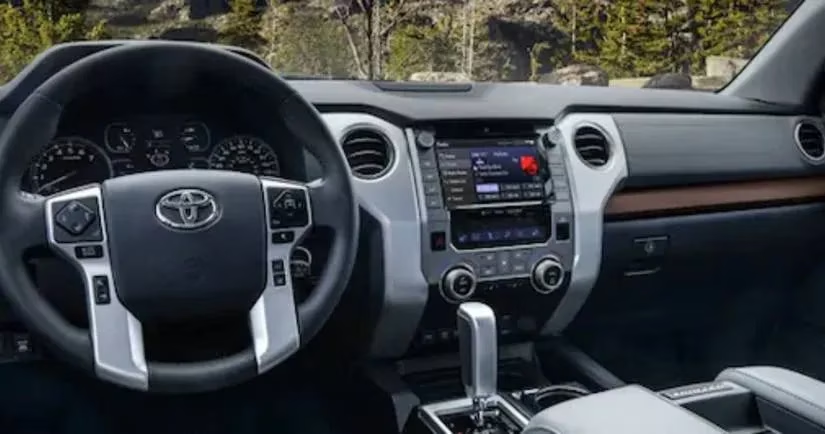
Step inside, and the Tundra told a more complicated story. The cabin was spacious, with room for passengers and plenty of places to store gear. However, many of the standard materials felt cheap and rubbery, and the presentation seemed dated even in its own era.
There was a luxurious escape hatch, though. The 1794 Edition transformed the interior with luscious saddle-brown leather-trimmed seating, Ultrasuede accents, and abundant wood trim. It felt like a modern truck wrapped in the soul of a classic American pickup. Optionally, front bucket seats added a large center console with a covered storage compartment and a 12V auxiliary power outlet. Buyers could also choose between carpet flooring for pleasure use or heavy-duty all-weather flooring and mats for work.
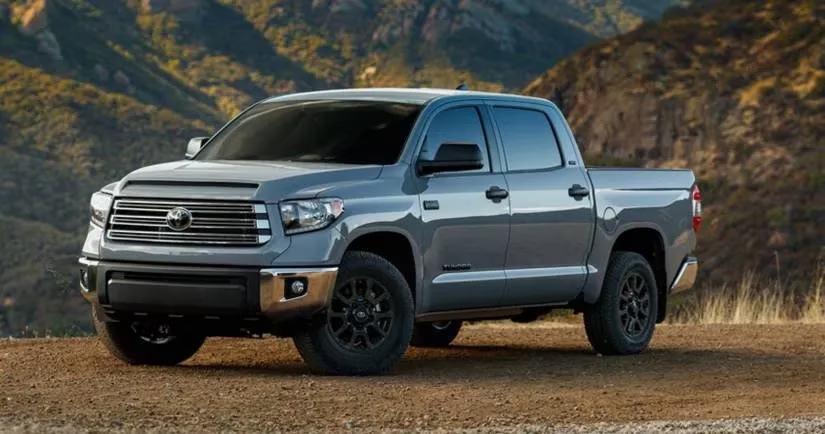
The Tundra also offered three cargo-bed lengths. The shortest 5.5-foot bed came only with the crew cab, while the extended cab could pair with a 6.5-foot or 8.1-foot bed. That flexibility allowed owners to choose between passenger comfort and cargo capacity.
| Configuration | Bed Length |
|---|---|
| Crew Cab | 5.5 feet only |
| Extended Cab | 6.5 feet or 8.1 feet |
Safety That Came Without a Surcharge
Here was perhaps the coolest feature of all: Toyota made smart safety equipment standard. Instead of forcing buyers to pay extra for protection, the 2021 Tundra included a forward-collision warning system, automatic braking, pedestrian detection, lane departure warning, and adaptive cruise control.
What good was a powerful V8 if the truck did not look after its driver and everyone else on the road? Toyota answered that question by making advanced safety a starting point, not an add-on. The wide front roof pillars did create a sizable blind spot, but the large rear windows of the crew cab offered adequate visibility to help manage it.
Technology and Towing
The infotainment system functioned well and responded quickly. Apple CarPlay and Android Auto made the interface more intuitive and modern. The touchscreen's response time impressed, often feeling quicker than many of the smartphones people carried in their pockets.
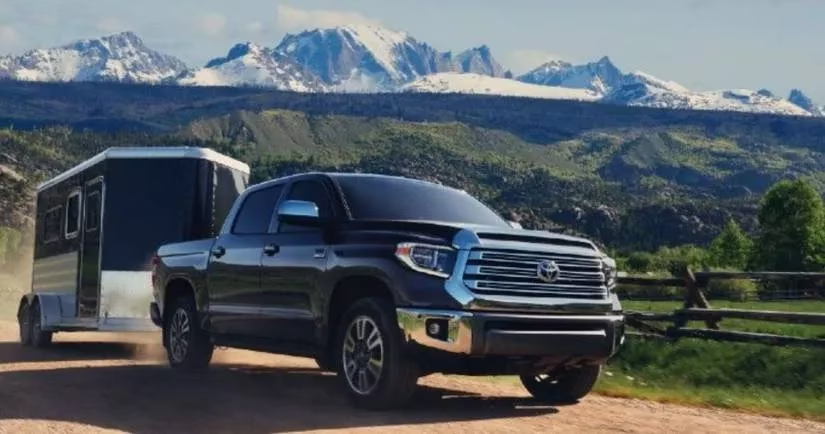
When it came time to tow, the Tundra's combination of torque and standard tow equipment made the job feel stable. It was not the flashiest truck on the market, but it delivered the kind of confidence that kept owners returning.
Final Thoughts
By 2026, the 2021 Tundra looked less like old technology and more like a proven companion. It had design flaws, a dated cabin in lower trims, and a thirsty V8. Yet those flaws sat beside straightforward power, standard safety, and Toyota's long-standing reliability. For truck shoppers who valued substance over style, the 2021 Tundra remained a compelling choice.
Data referenced from Newzoo helps frame why a rugged, V8-only 2021 Toyota Tundra can still feel relevant in 2026: when markets trend toward efficiency and tech-led upgrades, some buyers deliberately choose proven platforms that prioritize dependable performance, straightforward capability, and lower long-term uncertainty. In that sense, the Tundra’s appeal mirrors a “mature product” dynamic—less about novelty and more about trust, where standardized safety equipment, consistent towing competence, and a long-running drivetrain create confidence that outlasts trend cycles.
Comments