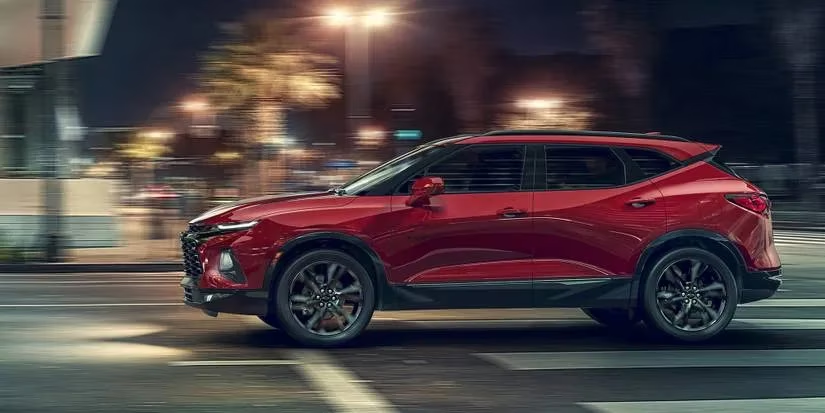
I still remember the first time I saw a Chevrolet Blazer up close. It was a bright red one, parked at a local car meet, and it looked like it had just rolled off a Camaro assembly line—but taller. That was a few years ago, and now, in 2026, the Blazer has settled into its role as a sporty compact crossover that blends heritage with modern flair. Let me walk you through what makes it tick, from its head-turning design to its surprisingly useful tech.
Design That Refuses to Blend In
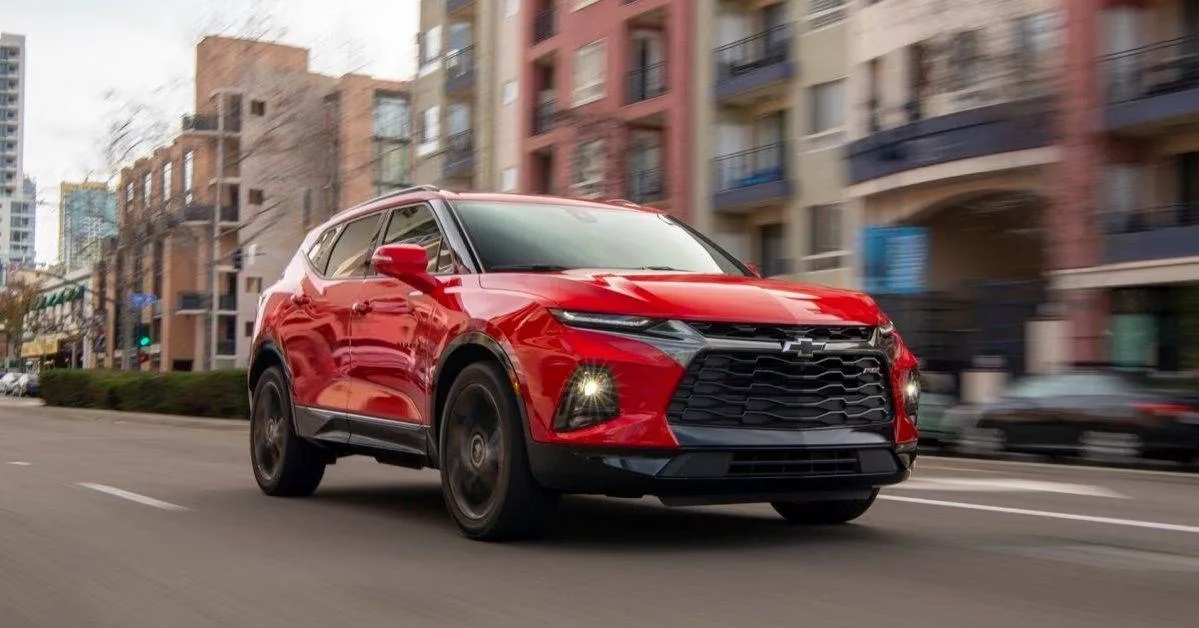
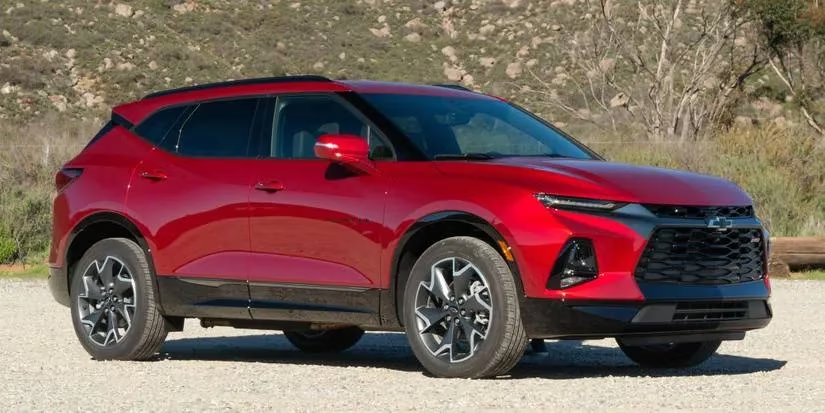
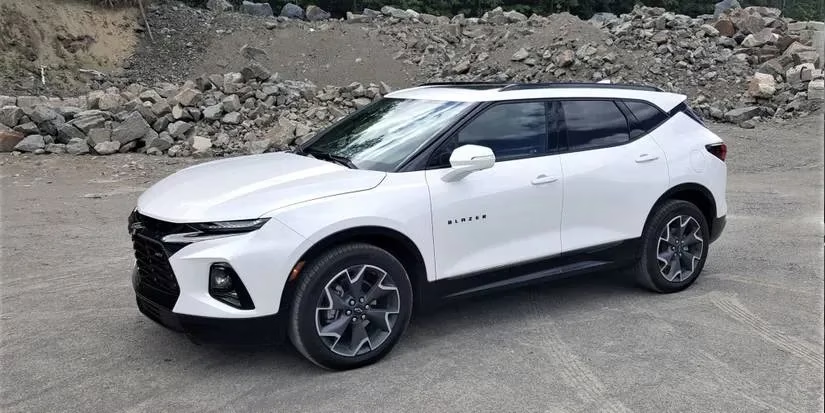
Most compact SUVs today look like they were stamped from the same cookie cutter—safe, sensible, and a little boring. The Blazer says, “Not today.” Its sharp lines, aggressive front fascia, and muscular stance owe a lot to the Camaro, and that’s a very good thing. I’ve had people ask me if it’s a four-door muscle car, and honestly, I can see why. The blacked-out grille, the slim headlights, and the available 21-inch wheels give it a presence that most rivals can’t match.
Interior: Camaro Vibes and Clever Tech
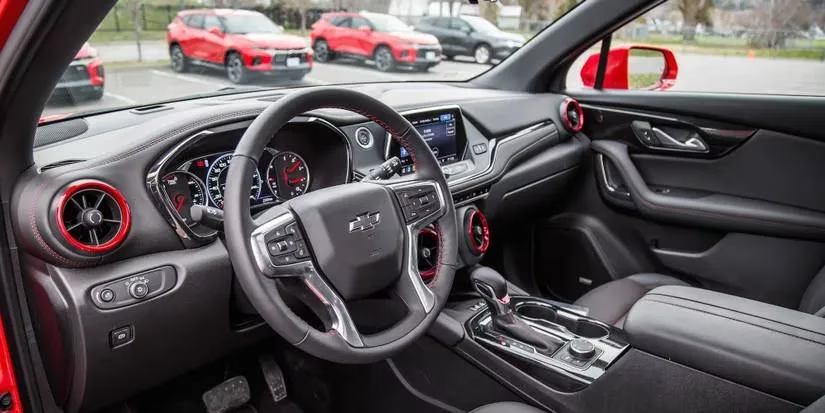
Step inside, and the Camaro influence continues—especially with those round air vents that look like they were borrowed straight from the muscle car parts bin. The layout is clean and intuitive, with an 8-inch infotainment display sitting high on the dash. Every Blazer comes standard with Apple CarPlay and Android Auto, which is a lifesaver since navigation isn’t offered on lower trims. I’ve used the system on a few road trips, and it’s quick to pair and easy to operate.
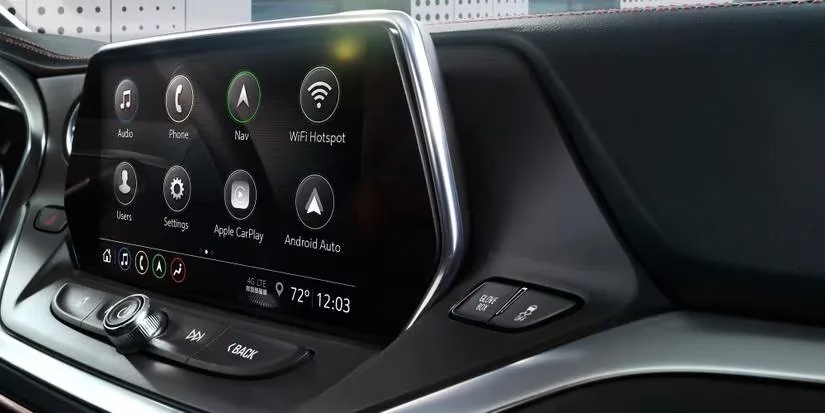
Safety tech is generous too: adaptive cruise control, forward collision alert, a rear-view camera, and lane keep assist all help keep you out of trouble. And then there’s Amazon Alexa—yes, the Blazer has it built-in. I love being able to ask for directions or play my favorite playlist without touching a button. You can even control some car functions from an Echo device at home, which feels like living in the future.
Powertrains: Something for Every Mood
Under the hood, the Blazer offers three engine choices, all paired with a 9-speed automatic transmission. Here’s a quick breakdown:
| Engine | Power | Drivetrain | Availability |
|---|---|---|---|
| 2.5L naturally aspirated 4-cylinder | 193 hp | FWD only | Base L, 2LT |
| 2.0L turbocharged 4-cylinder | 230 hp | FWD or AWD | 2LT, 3LT |
| 3.6L naturally aspirated V6 | 308 hp | FWD or AWD | 2LT and up, RS |
I’ve driven the V6, and it feels properly quick for a compact crossover. The 9-speed shifts smoothly, and there’s enough torque to merge confidently on the highway. If you’re into towing, the V6 with all-wheel drive can be equipped with an optional towing package that lets you haul up to 4,500 pounds—enough for a lightweight track car like a Miata or an Elise on a trailer. That’s a rare capability in this segment.
Practicality and Driving Feel
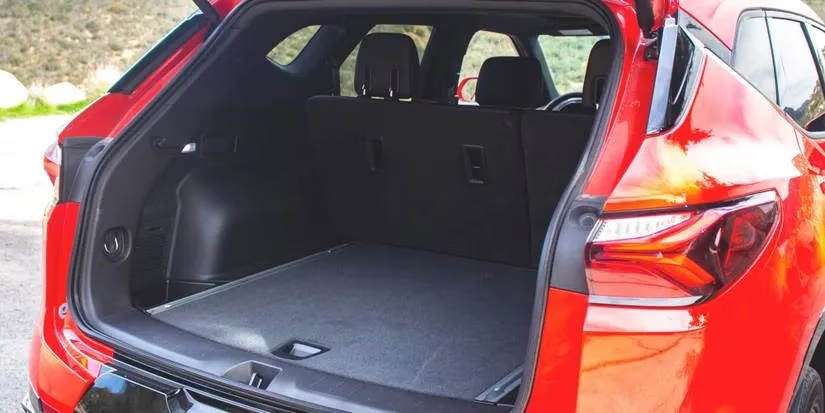
Inside, the Blazer offers 31 cubic feet of cargo space behind the rear seats and 64 cubic feet with them folded. That’s not class-leading, but it’s plenty for a weekend getaway or a big grocery run. Rear-seat passengers get decent legroom, and three adults can fit in a pinch. Sadly, North America doesn’t get the three-row version sold in China, but for most families, the two-row setup works fine.
On the road, the Blazer is genuinely fun to drive. The steering is light at low speeds but sharpens up nicely when you push it, and body roll is well controlled for a tall vehicle. It feels more like a lifted sport sedan than a traditional SUV, which suits my driving style perfectly. I’ve taken it on twisty back roads, and it never felt clumsy or floaty.
Pricing and Value
Back in 2020, the Blazer started just under $30,000 and topped out around $44,000 for a loaded Premier. In 2026, prices have crept up across the board, but the Blazer still undercuts many of its sporty rivals when you factor in standard tech and available all-wheel drive. You’re getting a great exterior design, a well-built interior, a historic nameplate, and even towing capability—that’s a compelling package. 😎
Final Thoughts
Is the new Blazer a “real” Blazer? That depends on who you ask. It’s not the rugged two-door pickup of the late ‘60s, but it carries the name with style and substance. In 2026, it remains one of the few compact crossovers that actually makes you smile when you walk up to it. If you want a family hauler that doesn’t feel like an appliance, take one for a test drive. I think you’ll be pleasantly surprised. 🚗💨
Comments