I have always been drawn to overland expedition vehicles, but nothing prepared me for how extreme EarthRoamer's 2026 lineup really is. While many of us shop for camper vans in the $3,000 to $60,000 range, this Colorado-based builder has been operating since 1998 and turns Ford trucks into rolling luxury apartments that can handle serious off-road terrain. EarthRoamer is often confused with EarthCruiser, another expedition rig maker, but EarthRoamer sits in a completely different financial universe. The current lineup is built around two models: the EarthRoamer LTi, which starts near $695,000 in base form, and the larger EarthRoamer HD, which starts around $1.9 million. A well-optioned LTi can easily cross the $1 million mark, while the HD is a seven-figure machine from the start.
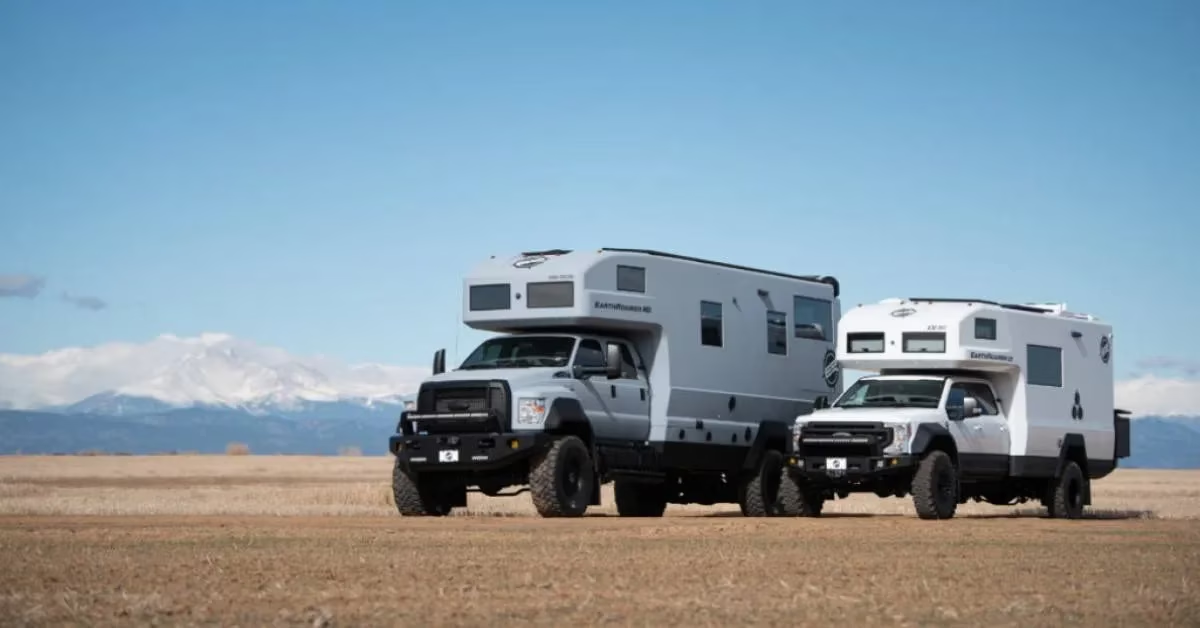
Two Overlanding Titans 🛻
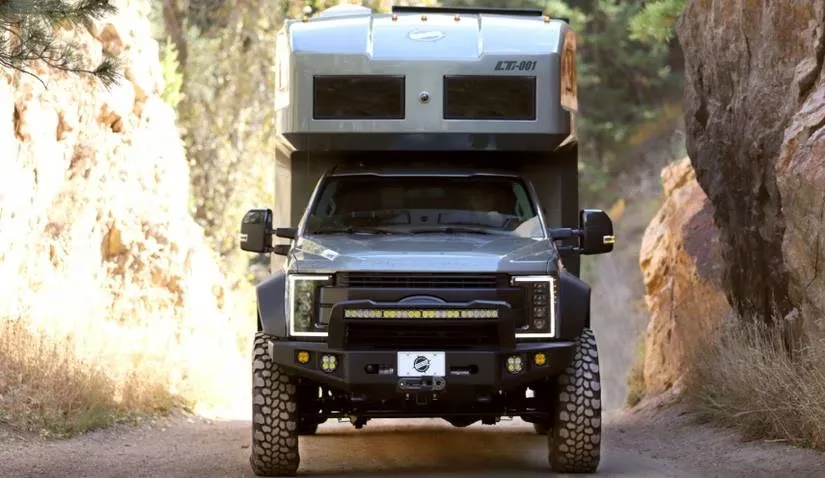
The EarthRoamer LTi is based on a Ford F-550 Lariat chassis. It is powered by a 6.7-liter Power Stroke turbo-diesel V8 that produces 330 horsepower and 750 lb-ft of torque. Power goes through a 10-speed automatic transmission to a four-wheel-drive system, and it carries a 95-gallon diesel fuel tank for long remote trails. Ground clearance is listed at 12.5 inches, which helps when the pavement ends and the adventure begins.
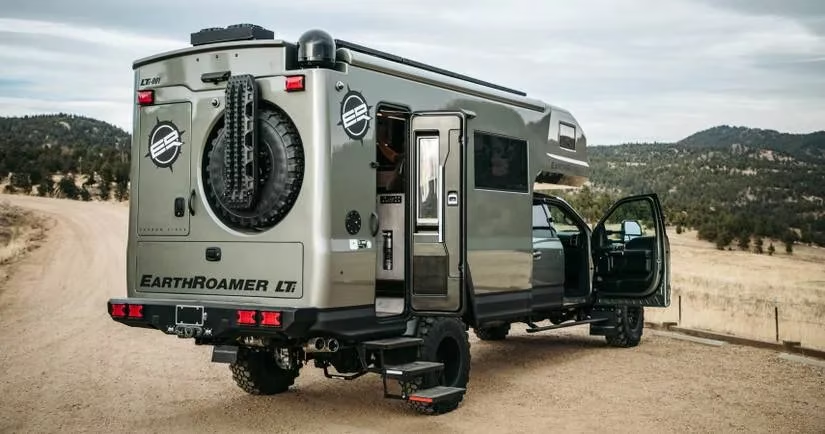
The EarthRoamer HD rides on a Ford Super Duty F-750 King Ranch chassis and uses the same 6.7-liter engine. Because it is paired with a 6-speed automatic instead of the 10-speed unit, it makes slightly less torque at 725 lb-ft, but it still delivers the same 330 horsepower. The HD carries a massive 115-gallon diesel fuel tank, rolls on meaty 46-inch Michelin tires, and uses Fox front shocks plus a rear air-spring suspension. Ground clearance is 12 inches, and even with a full camper body on its back, the HD can tow up to 30,000 pounds.

Here is how the two EarthRoamer models compare in key areas:
| Feature | EarthRoamer LTi | EarthRoamer HD |
|---|---|---|
| Chassis | Ford F-550 Lariat | Ford F-750 King Ranch |
| Engine | 6.7L turbo-diesel V8 | 6.7L turbo-diesel V8 |
| Horsepower | 330 hp | 330 hp |
| Torque | 750 lb-ft | 725 lb-ft |
| Transmission | 10-speed automatic | 6-speed automatic |
| Diesel tank | 95 gallons | 115 gallons |
| Ground clearance | 12.5 inches | 12 inches |
| Towing capacity | Not specified | 30,000 lbs |
| Solar output | 1,320 W | 2,100 W |
| Battery pack | 11,000 Wh | 20,000 Wh |
| Fresh water | 100 gallons | 250 gallons |
| Gray water | 40 gallons | 125 gallons |
Carbon Fiber Construction and Floorplans
One of the biggest upgrades on the LTi is its carbon-fiber monocoque camper body. EarthRoamer uses a vacuum infusion process that makes the shell stronger, lighter, and more rigid than the outgoing LTS. This helped the LTi shed over 1,000 pounds compared to its predecessor. The HD also benefits from a lighter carbon-fiber camper body built with the same process, even though its overall dimensions and truck chassis are much larger.
Both EarthRoamer models are offered with six different floorplans. Buyers can choose between different seating and sleeping capacities, sofa sizes, dedicated dining and workspace layouts, bedroom dimensions, kitchen arrangements, storage galleries, and modular interior setups. In short, there is a configuration for couples, families, remote workers, and serious expedition travelers.
Off-Grid Luxury Features
The LTi comes standard with seating for six and sleeping space for four. It has a roof-mounted solar array that can generate 1,320 watts and a battery pack rated at 11,000 watt-hours. That is enough power to stay away from civilization for extended periods. It also carries a 100-gallon freshwater tank and a 40-gallon gray water tank.
The HD simply enlarges everything. It features a 2,100-watt solar layout, a 20,000-watt-hour battery pack, a 250-gallon freshwater tank, and a 125-gallon gray water tank. It also adds a hydraulic leveling system for tricky terrain, a deployable outdoor kitchen, an external shower, and a retractable awning with LED lighting.
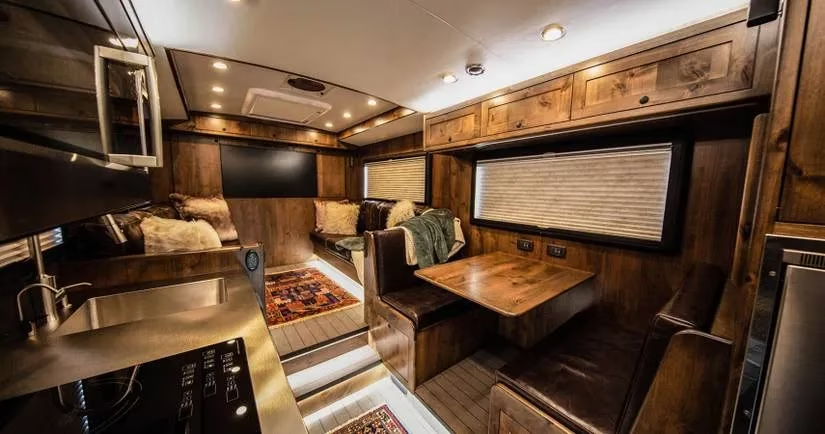
Both rigs can be optioned with digital controls for the onboard systems, frameless windows, an updated hot-water system, dual onboard inverters, ambient interior lighting, heated floors, a washer and dryer, and a dry bath. These features push the price quickly upward, but they turn a rugged truck into a true luxury apartment on wheels.
Are They Worth the Seven-Figure Price?
As a regular player in the camping and overlanding world, I was initially skeptical about any camper costing more than a house. But after looking at the carbon-fiber construction, hydraulic leveling, large solar and battery systems, huge water tanks, and the level of interior finish, the price starts to make sense. It would be difficult for a local coach-builder to match EarthRoamer's experience and engineering, especially since the company has been refining these rigs since 1998.

These EarthRoamers are not just camper vans. They are overland expedition machines with a niche hypercar-like appeal. For the right buyer, the HD and LTi are worth every dollar because they make remote travel feel like a five-star experience while still being able to crawl through mud, sand, snow, and rocky trails.
Comments