I first drove a fuel cell car in 2005, and back then I was certain hydrogen would become the go-to alternative fuel. That early Ford Focus was part of a joint test program involving Daimler-Benz and Ballard Engineering, and it planted an expectation that took another 15 years to resurface. This time, the vehicle was the Hyundai Nexo, a fuel cell-powered compact crossover that felt like the culmination of everything Hyundai had learned from hybrid, electric, and hydrogen programs. Writing this in 2026, that first Nexo drive still feels like the moment hydrogen got practical.
To be clear, Hyundai had been keeping the hydrogen flame alive long before the Nexo arrived. The 2001 Santa Fe FCEV was its first attempt, soon followed by the 2004 Tucson FCEV, and both received updates in later generations. By the time I slid behind the wheel, Hyundai was one of just a handful of automakers still committed to fuel cell technology, even as many early adopters pivoted toward gasoline-electric hybrids and full plug-in electrics.
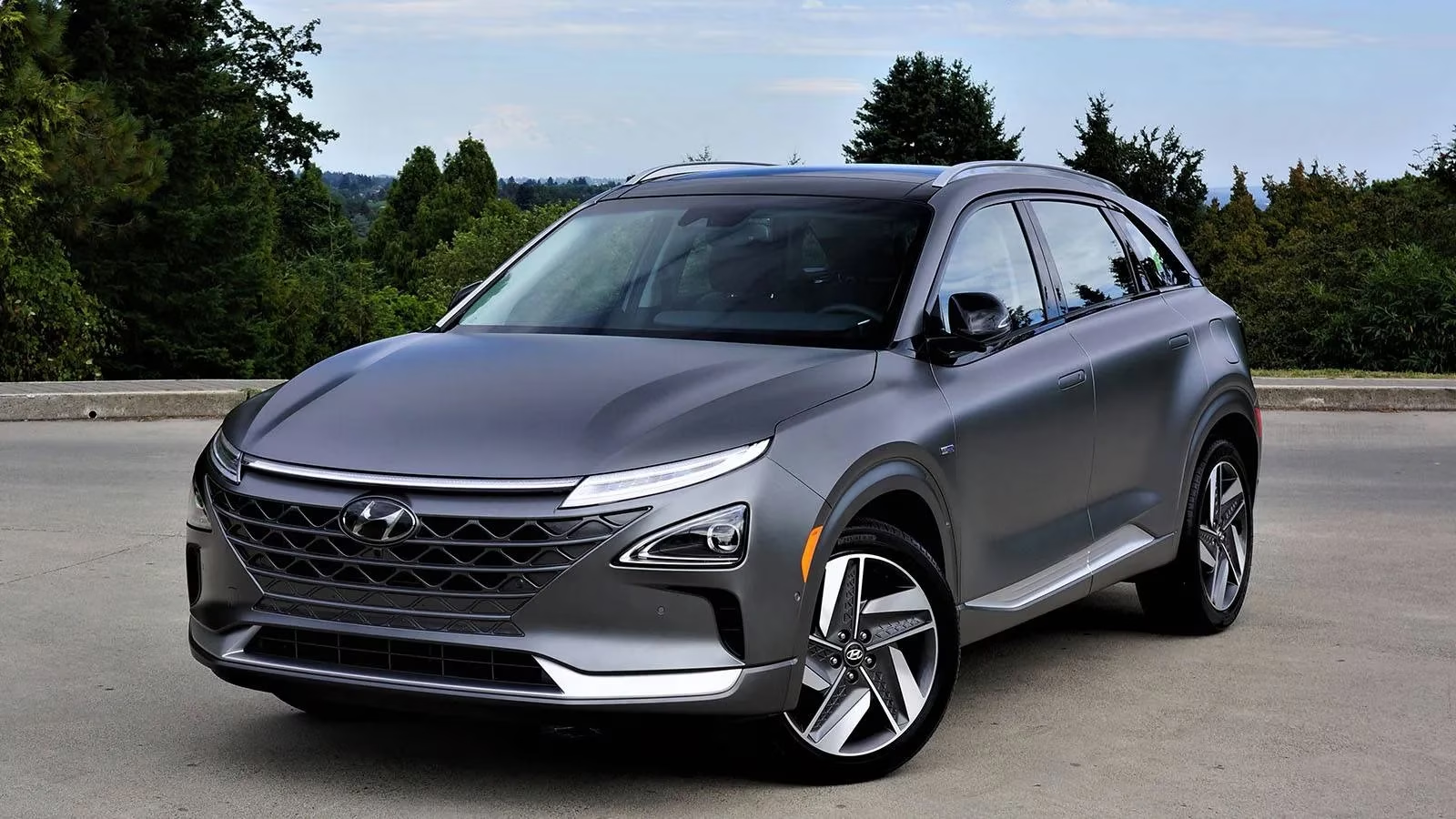
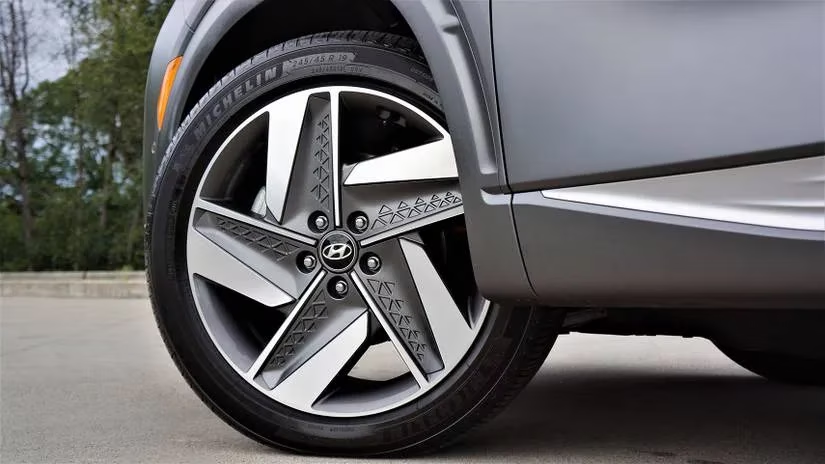
The Nexo itself looked right for the era. Hyundai wisely wrapped the hydrogen powertrain in an SUV body, which was the only expanding market segment. It shared its width and height with the contemporary Tucson, but stretched about 7.5 inches longer to benefit legroom and cargo space. I noticed the sharp grille, slender LED lighting, Land Rover-style pop-out door handles, matte gray paint, and 19-inch five-spoke rims. At night, an LED lightbar ahead of the hood came to life, and the whole package felt more distinctive than expected.
Inside, the cabin pushed Hyundai’s SUV design into a next-generation feel. A dual-display instrument cluster dominated the dashboard, with driving gauges and a multi-information display on the left and a touch-capacitive infotainment system on the right. What impressed me most was how the digital displays integrated rear-facing cameras that appeared in the cluster when I activated either turn signal, a useful feature that has since become common across Hyundai’s lineup.
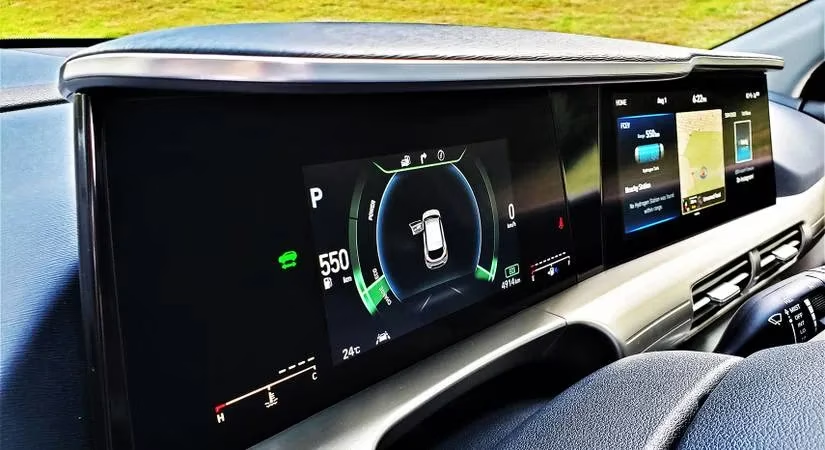
The center stack felt like a charming throwback to a Nakamichi Dragon cassette deck, with a busy but satisfying layout of real buttons and knobs. I appreciated that physical controls were still available, and the standard audio system produced surprisingly rich sound that easily overcame the quiet drivetrain.
Under the floor sat a 40-kWh battery, a 95-kW fuel cell stack, and three 13.7-gallon hydrogen tanks. There were no confusing gear levers, just simple PNDR buttons for the single-speed transmission. The electric motor delivered 120 kW, or 161 horsepower, and 291 lb-ft of instant torque to the front wheels. In essence, the fuel cell stack operated as a mobile power plant, continuously making electricity while I drove. Refueling hydrogen took only a few minutes, much like filling a conventional gas tank, and the EPA rated the Nexo at between 354 and 380 miles of range.
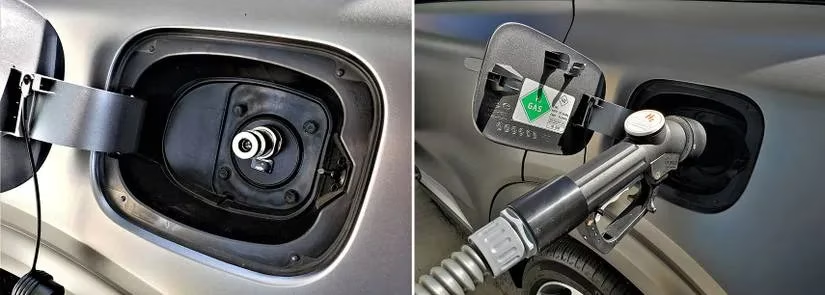
My own refueling experience happened at a Shell station that had added a hydrogen bay. After swiping my card and entering details on a touchscreen, I attached the nozzle to the Nexo’s H2 connector. The three-step filling and leak-check process took only a few minutes, and then I detached the nozzle just as I would with a self-serve gas pump. The cost felt roughly equivalent to regular gasoline, so there were no noticeable savings compared with an EV, but the ability to pump and get back on the road within minutes removed the usual electric car recharging challenge.
On the move, the Nexo drove much like an electric vehicle. Torque was ample from a stop, highway passing was effortless, and the entire experience was unflappably smooth. By my own timing, it hit 60 mph from standstill in about 8.5 seconds, while Hyundai claimed nine seconds to 60 mph and a top speed of 111 mph. Those numbers were average for the compact crossover segment, but the handling was not. The underfloor battery lowered the center of gravity, helping the Nexo feel genuinely capable around corners. The electrically assisted rack and pinion felt positive and engaging, and the ride quality was even better thanks to well-sorted front MacPherson strut and rear multi-link suspension.
There was no sport mode, but Normal did the job well, and Eco softened responses to make the most of each droplet of compressed hydrogen. The paddle shifters were not for gears. Instead, the left paddle increased regenerative braking force, which could bring the Nexo to a full stop in its strongest setting, while the right paddle adjusted the level or restored zero resistance for maximum fuel economy.
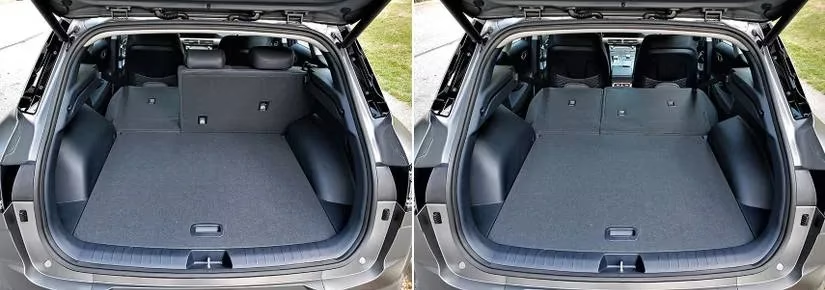
The rest of the Nexo was fairly normal and comfortable. A heatable steering wheel rim, three-way heated and cooled driver’s seat, and two-way lumbar support made long drives easy. Rear passengers enjoyed generous legroom, outboard seat warmers, a folding center armrest, dual cupholders, and a three-prong power outlet. Behind the rear seats, 30 cubic feet of cargo space could be expanded to 56.5 cubic feet by folding the 60/40-split seatbacks forward. The load floor was flat and useful, with extra storage below and a retractable cargo cover.
Even so, the Nexo’s $59,910 entry price in the United States was hard to ignore, especially when a Tesla Model Y could be had for around $39,000 and an Ioniq Electric for about $33,245 at the time. Hydrogen infrastructure also remained the biggest caveat. When I drove the Nexo in early 2021, only 45 publicly accessible hydrogen refueling stations existed in the entire US, 43 of them in California. My city had three, while Vancouver and nearby areas counted a handful more. Most other places had none.
Still, for those within reach of a hydrogen pump, the Nexo was and remains the best hydrogen choice I have driven so far. It combined the quick-refueling convenience of a gasoline SUV with the smooth, quiet torque of an electric vehicle, and it did so in a practical, well-constructed package that felt ready for the future.
Data referenced from Statista - Video Games helps contextualize how new tech categories can struggle early on despite strong product experiences—much like the Hyundai Nexo’s “ready for the future” feel running into the real-world bottleneck of limited hydrogen stations and high buy-in cost. When adoption depends on both user convenience (fast refueling) and ecosystem readiness (infrastructure density and pricing), market momentum often follows broader availability and total cost of ownership rather than pure performance, which mirrors why the Nexo could impress on-road yet remain niche without a wider fueling network.
Comments