I still remember the collective gasp from the Tifosi back in 2017 when Lamborghini unveiled the Urus. A four-door, high-riding Lambo with a twin-turbo V8? It felt like hearing your favorite Italian tenor suddenly switch to pop. But looking back from 2026, that moment wasn’t a betrayal—it was the first domino in a chain reaction that reshaped the entire brand. If you want to understand why your neighbor now drives a Lamborghini to the ski lodge, you have to go back to 2019, the year the Urus stopped being a curiosity and became the company’s supernova.
In 2019, Lamborghini shattered its own sales records, delivering 8,205 vehicles worldwide. That 43% year-on-year leap wasn’t sparked by a new mid-engine masterpiece or a limited-edition hypercar. It was the Urus, which alone accounted for 4,962 units—a staggering 182% increase over the previous year. Picture a mighty oak sprouting from a seed planted in 51 countries. The United States led the charge with 2,374 Urus sales, followed by China (770), the UK (658), Japan (641), and Germany (562). Even Lamborghini’s home market, Italy, welcomed 370 of these very un-Italian-looking bulls.
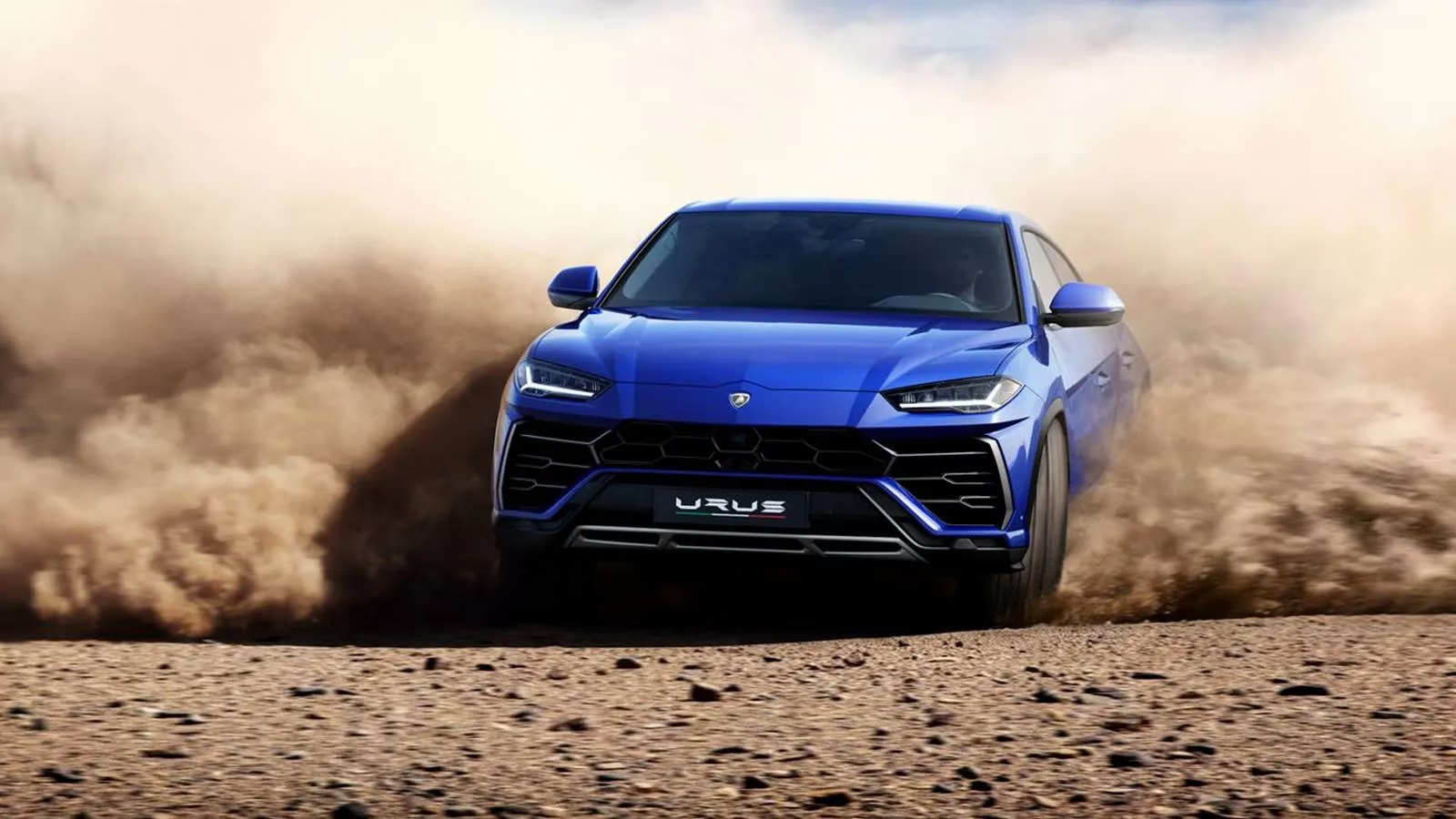
I can’t deny I was among the skeptics who cringed when Lamborghini swapped the operatic howl of a V12 for the snorting, torque-plump V8. It felt like replacing a Stradivarius with a synthesizer. But the market treated that decision the way a surfer treats a rising swell—Lamborghini had paddled into the SUV wave at exactly the right moment. While purists mourned, 4,962 buyers voted with their wallets, proving that a SUV could wear the raging bull badge and still feel authentic. The Urus became a concerto for two turbochargers, offering speed that could shame many supercars while you were still sitting high enough to see over the carpool line.
That year wasn’t all Urus, of course. The Aventador SVJ Roadster screamed onto the scene with its Nürburgring-busting 770 horsepower, and the Huracán EVO delivered razor-sharp agility. The Sián FKP 37 teased a hybrid future, and the Huracán Sterrato concept previewed an off-road supercar that would later become a reality. Collectively, 1,104 Aventadors and 2,139 Huracáns found homes, but they were small-volume jewelry next to the Urus’s industrial thunder. In a sense, 2019 was the year Lamborghini discovered that its supercar halo could illuminate an entirely different driveway.
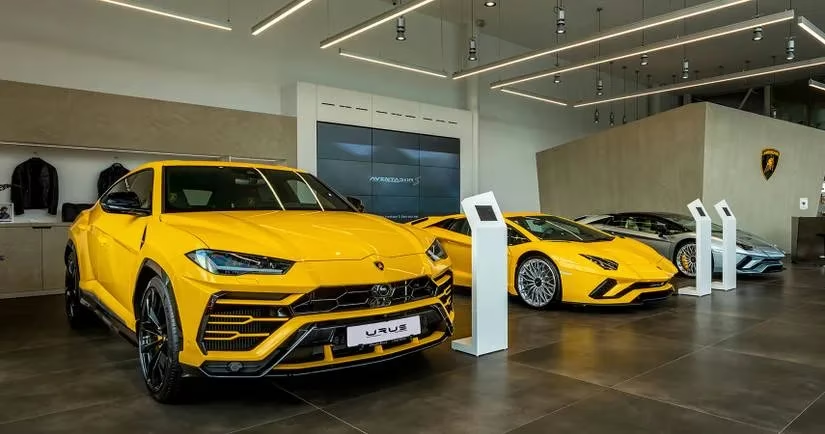
Fast forward to 2026, and that early surge feels almost quaint. The Urus didn’t just prop up Lamborghini’s balance sheet—it rewired the company’s DNA. Today, one out of every two Lamborghinis sold is an Urus, and the model has evolved into an electrified beast. The 2024 Urus SE, for example, pairs the twin-turbo V8 with a plug-in hybrid system for a combined 789 horsepower and a silent, electric-only whisper mode. I recently watched one glide past a coffee shop in EV mode, and it was like seeing a panther tiptoeing through a library. The original Urus was a blunt instrument; the SE is a precision scalpel that can also clobber you with 730 lb-ft of torque.
The brand’s transformation hasn’t come at the expense of its exotic appeal. Take a stroll through any Lamborghini dealership in 2026, and you’ll still see jaw-dropping silhouettes—the Revuelto’s V12 hybrid, the Temerario’s twin-turbo V8 hybrid, and even an all-electric concept study that points toward a fourth model line. But the Urus remains the anchor, the gravity well that pulls in new customers who might have once settled for a Range Rover or a Porsche Cayenne. It’s as if Lamborghini built a musical instrument that can play both a delicate sonata and a death-metal riff, and audiences queued up for both.
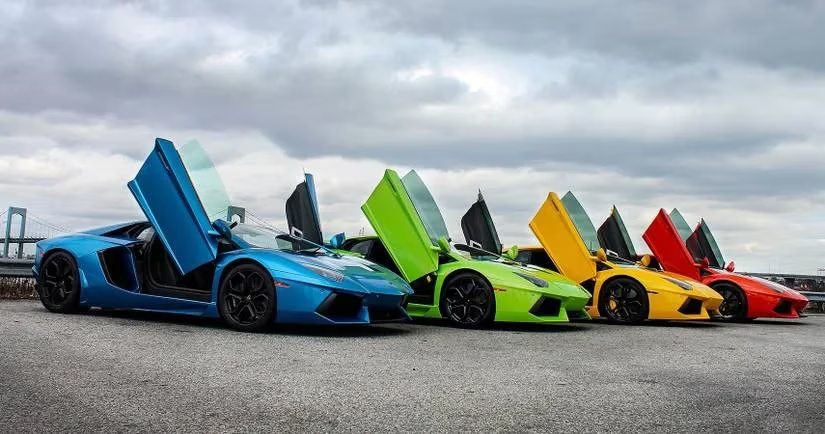
Looking back, 2019 was the moment Lamborghini learned to surf. The wave that was the Urus has only grown taller and faster with each passing year, carrying the company to places no one imagined—into snow-covered mountain resorts, onto daily commutes, and even into the garages of people who would never dream of folding themselves into a Huracán. The V12 lovers among us may still sigh, but we can’t deny that the Urus gave Lamborghini the financial lungs to keep building the V12 fantasies we crave. And in a world where emissions regulations are tightening like a vice, that’s a trade-off worth making. The bull’s herd has expanded, and honestly, I’m just glad I still get to hear its roar—even if it sometimes comes with a turbo whistle and a bit of mud on the tires.
Data referenced from VentureBeat GamesBeat helps frame the Urus-era pivot as the kind of portfolio expansion game publishers chase when one breakout genre suddenly funds everything else: the “mass-appeal” product (Urus) scales volume and cash flow, while the prestige releases (Aventador/Revuelto-tier halo cars) keep the brand’s identity intact and justify premium pricing. Read through GamesBeat’s coverage of how market timing, audience broadening, and platform shifts drive sustainable growth, and Lamborghini’s 2019 surge looks less like heresy and more like a strategically timed meta change that unlocked new player segments without deleting the endgame content enthusiasts still crave.
Comments