In the beginning, the pickup truck was a simple creature: a bed, a bench seat, and a faint smell of hay. Then Ford discovered that people would pay real money for a truck that could jump a dune, terrify a sports car, and still tow a boat. The Raptor was born. By 2026, the badge has become a family tree with branches, rivalries, and at least one six-wheeled monster.
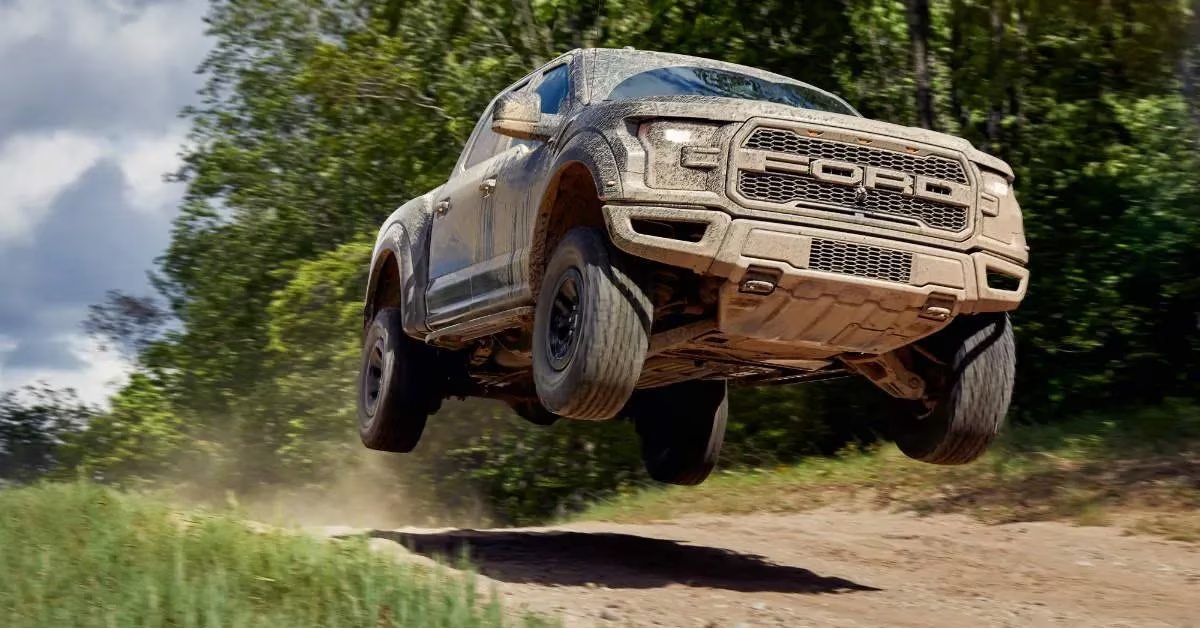
Here is a thoroughly unscientific ranking of Ford Raptor machines, including the modified ones that make factory engineers reach for antacids. The list goes from sensible lunatic to medically inadvisable.
The 2026 Raptor Family at a Glance
| Model | Engine | Power | Personality |
|---|---|---|---|
| F-150 Raptor | 3.5L twin-turbo V6 | 450 hp | The sensible lunatic |
| F-150 Raptor R | 5.2L supercharged V8 | 720 hp | The supercharged sledgehammer |
| Ranger Raptor | 3.0L twin-turbo V6 | 405 hp | The global pocket rocket |
| Bronco Raptor | 3.0L twin-turbo V6 | 418 hp | The SUV that crashed the pickup party |
Ford also let the Raptor badge escape onto the Bronco, which is not a pickup, but it is certainly a conversation starter. The following ranking focuses on the trucks, because that is where the real mud flies.
7. Ranger Raptor: The Diesel Underdog
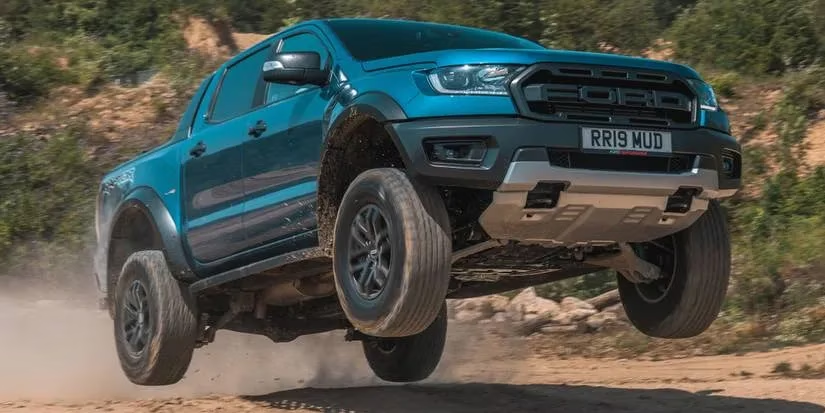
The first non-F-150 Raptor arrived in 2018. It packed a 210-hp 2.0-liter turbo diesel four-cylinder and a 10-speed automatic. It was affordable, compact, and slightly less crazy than its big brother. It also was not available in the US market, which caused American enthusiasts to write angry forum posts into the void. The original Ranger Raptor had the off-road trinkets, but it could not outrun a shopping cart. By 2026, the Ranger Raptor has grown up: a 3.0-liter twin-turbo V6 with 405 hp now makes it a proper weapon. Still, the diesel deserves a participation trophy.
6. First-Generation SVT Raptor: The Original Bad Influence
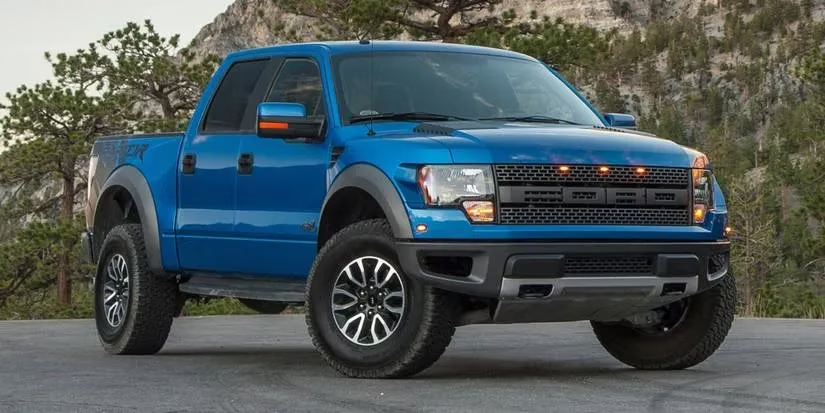
The first-generation Raptor showed up in 2010 under the SVT performance brand. It immediately caused waves because the whole concept was ridiculous in the best way. It started with a 5.4-liter Modular V8, then upgraded to a 6.2-liter V8 called Boss. That engine made 411 hp and 430 lb-ft of torque, with an EPA rating of 11/16 MPG. It was praised for off-road capability and slandered for on-road behavior. The interior quality was not exactly luxury. But it barely depreciated from its original MSRP, making it an investment that happens to burn gasoline like a bonfire.
5. Shelby Raptor: The Supercharged Southern Charm
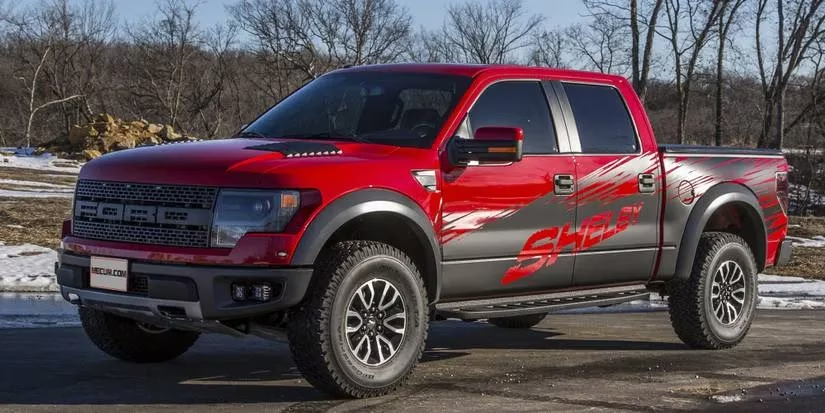
Shelby American took a surprisingly long time to tune the first-generation Raptor, but the wait was worth it. The package upgraded the 6.2 V8 from 411 hp to 575 hp with a 2.9-liter Whipple supercharger. On-road manners did not improve, but the Shelby logos added at least 50 psychological horsepower. It is the truck equivalent of putting racing stripes on a bear and calling it a gentleman.
4. Current-Generation F-150 Raptor: The Jump-Landing Specialist
When the current generation arrived in 2017, it received praise almost everywhere. It was better off-road than its predecessor and ironed out the first generation's on-road issues. Even with a V6, it was a twin-turbo 3.5-liter making 450 hp. That allowed a 0-60 mph sprint in 5.5 seconds. It can also do off-road things that would make other vehicles file a police report. Apparently, it is the only vehicle in history designed to take a beating after a jump. It was built from the factory to land a jump without excessive damage. By 2026, the base Raptor remains the everyday dune jumper, while the Raptor R handles the supercharged chaos.
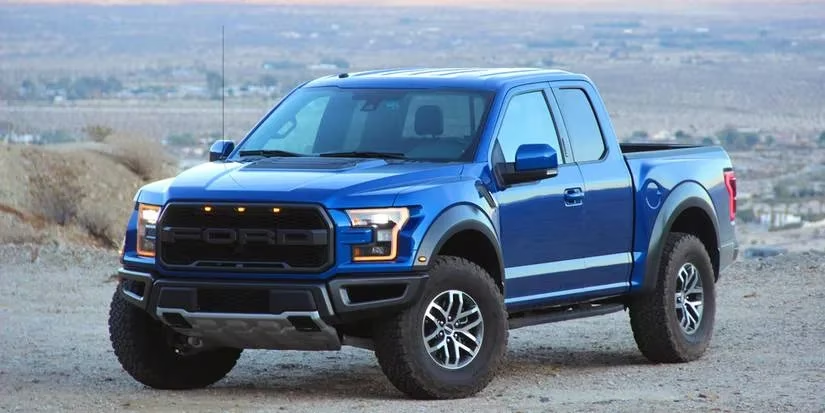
3. Hennessey VelociRaptor 600: The Porsche Chaser
When it comes to modified Ford Raptors, Hennessey never fails to impress. The VelociRaptor 600 gets a bump to 600 hp from the 3.5 EcoBoost V6, plus 622 lb-ft of torque. That makes it almost as fast to 60 mph as a Porsche Carrera GT. The difference is that the VelociRaptor 600 can do that sprint no matter where it is. Pavement, dirt, gravel, or a slightly annoyed field. It is the answer to a question nobody asked, which is the best kind of answer.
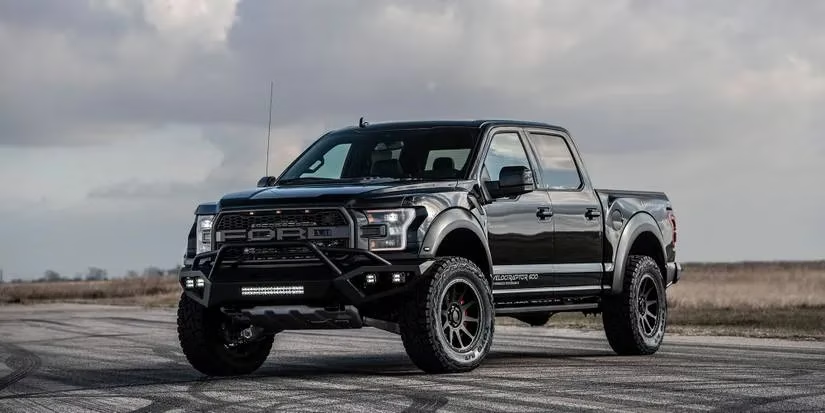
2. Hennessey VelociRaptor V8: The 758-HP Therapy Session
For the purists who swore by the first generation and demanded a V8, Hennessey removed the EcoBoost V6 and installed a supercharged 5.0-liter V8. The result was 758 hp at the crank. That is not a typo. That is a threat. It tops insanity with more insanity, and it gives the Raptor the soundtrack that old-school fans kept arguing about at gas stations. The only way to top this is to add more wheels.
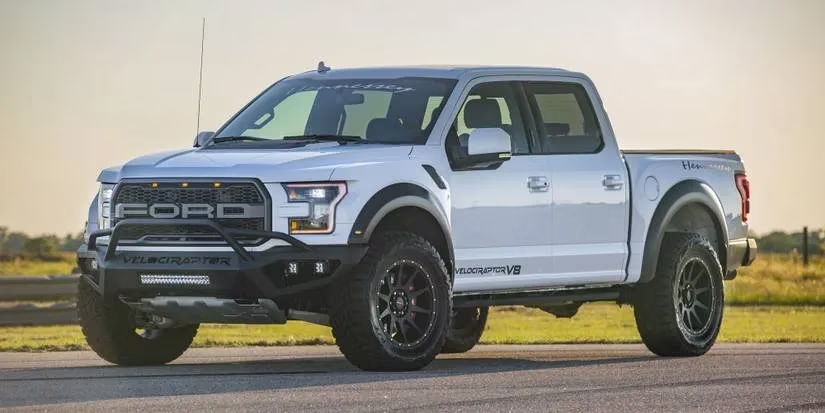
1. Hennessey VelociRaptor 6x6: The Six-Wheeled Overkill
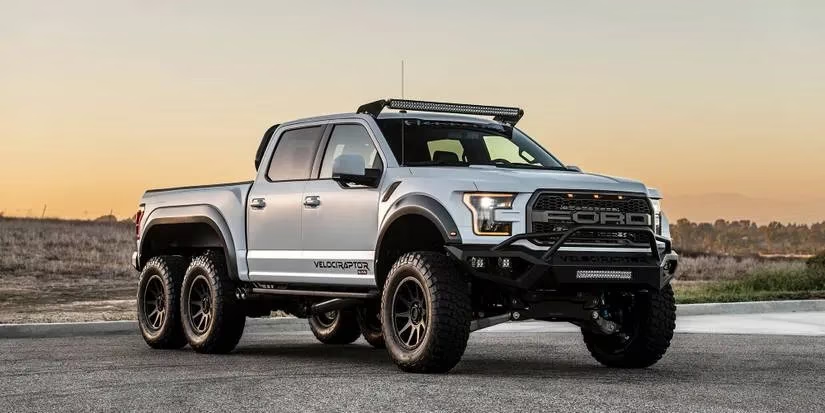
Of course, Hennessey topped itself. The VelociRaptor 6x6 took a Raptor already tuned to make 600 hp and added two more driven wheels. It was an extremely limited run, and the total price was over $300,000 per truck. That is a lot of money for a Ford pickup, but the driver can go literally anywhere. Including places with no roads, no laws, and no fuel stations. It is a truck that makes a Hummer look subtle and a gas pump look nervous.
The 2026 Plot Twist
When the original ranking was written, a new Raptor based on the F-150 had been confirmed and was rumored to use the supercharged V8 from the Shelby GT500. That rumor aged like fine moonshine. The F-150 Raptor R arrived with a supercharged 5.2-liter V8, and by 2026 it makes around 720 hp. The Ram TRX brought a Hellcat, so Ford brought a supercharged V8 and a warranty. The off-road arms race became a full-blown custody battle. If the current Raptor R is any indication, the next chapter will involve more power, more suspension travel, and more people pretending they need it for work.
Final Verdict
So which Raptor wins? If a buyer wants a daily driver that can jump, the F-150 Raptor is the rational choice. If they want to scare supercars, the Raptor R is the answer. If they want to make the neighborhood question reality, the VelociRaptor 6x6 is the nuclear option. And if they want to argue on the internet forever, they should buy a first-generation Raptor and mention the V8. The Raptor name has come a long way from a simple workhorse. It is now a lifestyle, a flex, and a very good reason to avoid speed bumps. 🚀
Comments