The Ford F-Series has been hauling stuff, breaking hearts, and hogging the spotlight since 1948. In that long family tree, the F-150 Lightning is the cousin who showed up with a leather jacket, a loud exhaust, and a promise to be the fastest thing on four wheels. Spoiler alert: it was quick, but not always as quick as its name suggested. The original SVT Lightning ran for two generations, vanished after 2004, and then—plot twist—the nameplate returned in 2022 as an electric truck. As of 2026, the Lightning badge means something very different, but the old gasoline-burning SVT models still have a cult following. Here is a look back at the coolest features of the Ford F-150 Lightning, a truck that rumbled, sulked, and eventually got replaced by a mud-flinging Raptor.
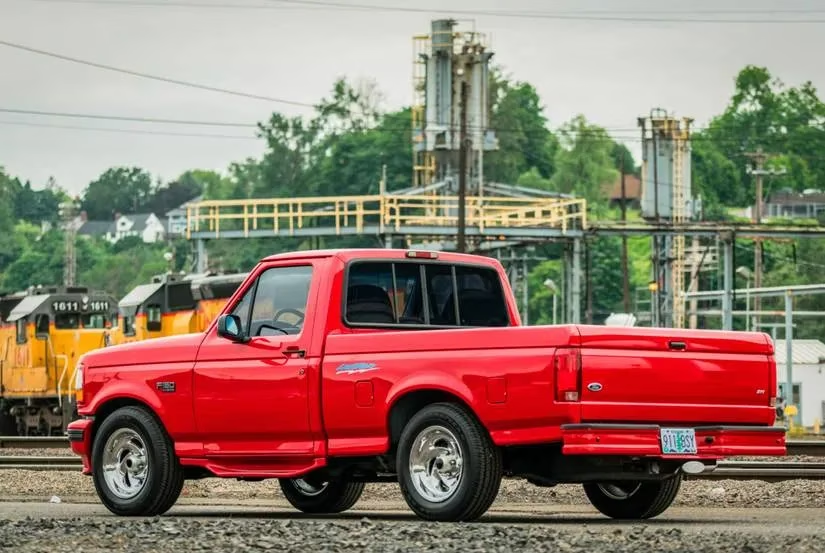
The Ford SVT Lightning is a high-performance version of the F-150 produced by the Ford Special Vehicle Team, or SVT. It was intended as a competitor for the Chevrolet 454 SS. The idea was simple: Ford would build on the F-150 model and create a truck with better handling, which meant extensive modifications to the front and rear suspension and frame. Introduced as a 1993 model, the first-generation Lightning was offered only as a standard cab short bed. Under the hood sat a 240-horsepower version of the 5.8L V8. It used a heavy-duty 4-speed automatic transmission from the F-350, normally paired with the 7.5L V8 or 7.3L diesel V8. Towing capacity matched a standard F-150, which was nice. But the mix of engine and transmission meant the Lightning did not always live up to its electric name. It was more distant rumble than strike-me-down.
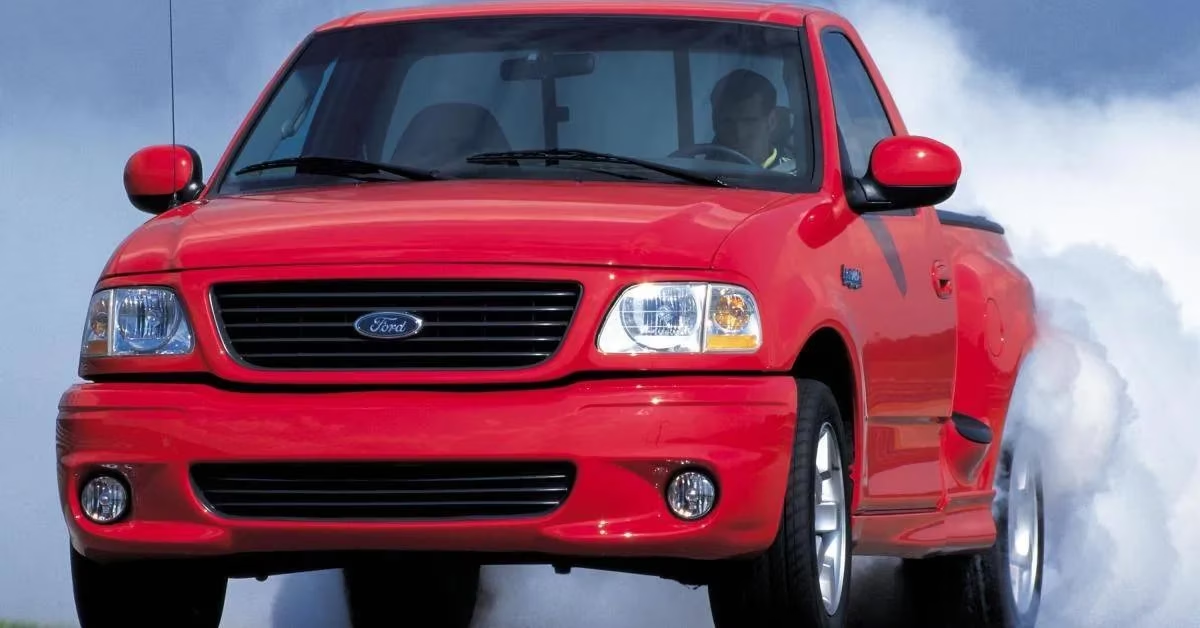
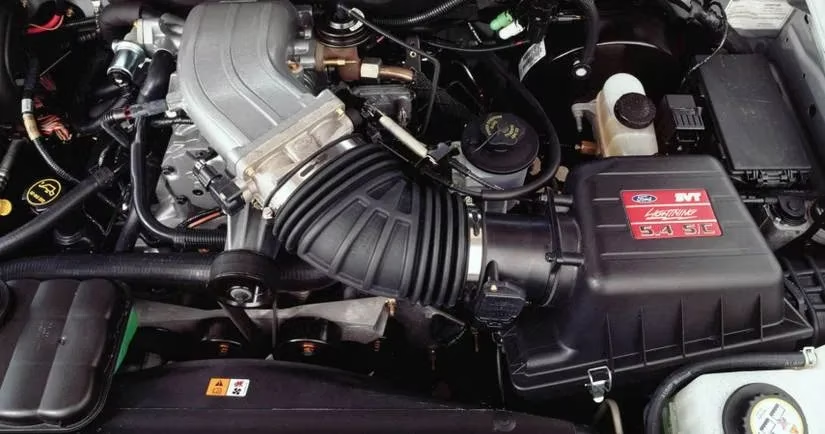
After three years, Ford released a second generation of the SVT Lightning for the 1999 model year. Once again it was based on the F-150, but for the Lightning edition there were suspension modifications and a slightly redesigned body. The engine was a supercharged version of the 5.4L V8 from the F-150, producing 360 horsepower, which was then increased to 380 horsepower in 2001. It was paired with a heavier-duty transmission from the F-350 pickup. This was the Lightning that finally felt like it might actually strike something. Eric Zinkosky, Ford Performance Vehicle Dynamics Technical Specialist, explained to Motor Authority why the party ended. 'Of particular concern was the braking,' he said. 'In order to haul a big truck like the 2004 Ford F-150 to a stop quickly on a road course, massive, heavy 6-piston calipers would have been required. In the end, too much bulky equipment would have been required to make a new SVT Lightning work.'
On a happier note, Zinkosky added that Jamal Hameedi—now Ford Performance Vehicle Chief Engineer—came up with the idea for an off-road performance machine, which would go on to be named the SVT Raptor. Hameedi looked at what people were doing with their F-150s. The answer, apparently, was playing in the dirt. The Raptor got the green light, and the Lightning got benched. In a nutshell, the Lightning was a street truck in an era when buyers wanted a dirt truck.
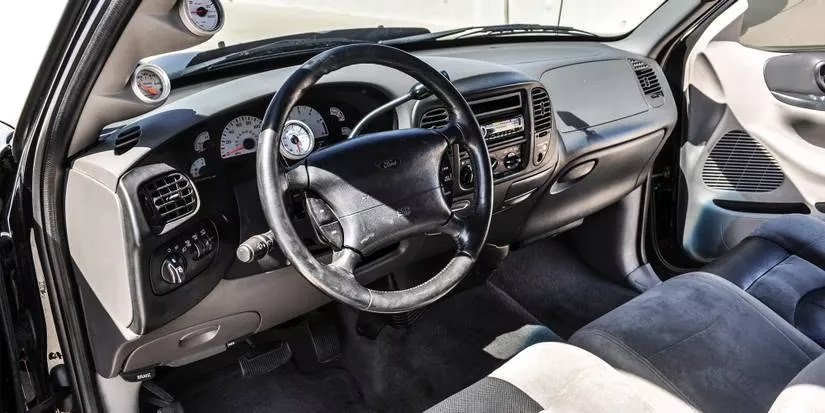
The interior had its own cool features. The leather-wrapped steering wheel isolated the steering column from vibrations. That made a huge difference when the truck went off-roading or traveled over terrains that were not smooth. The most notable interior element of the Lightning package was the pair of cloth bucket seats with adjustable lumbar and thigh supports. These seats looked awesome and hugged occupants like an overenthusiastic aunt. If one got a second-generation truck, the Lightning badge was stitched onto the back of the seats. Subtle? No. Cool? Absolutely.
The production story is a tidy little table of heartbreak.
| Generation | Years | Production | Body Style | Engine |
|---|---|---|---|---|
| First | 1993–1995 | 11,563 | Standard cab short bed | 5.8L V8, 240 hp |
| Second | 1999–2004 | 28,124 | Regular cab short bed | Supercharged 5.4L V8, 360–380 hp |
| Total | 1993–2004 | 39,687 | — | — |
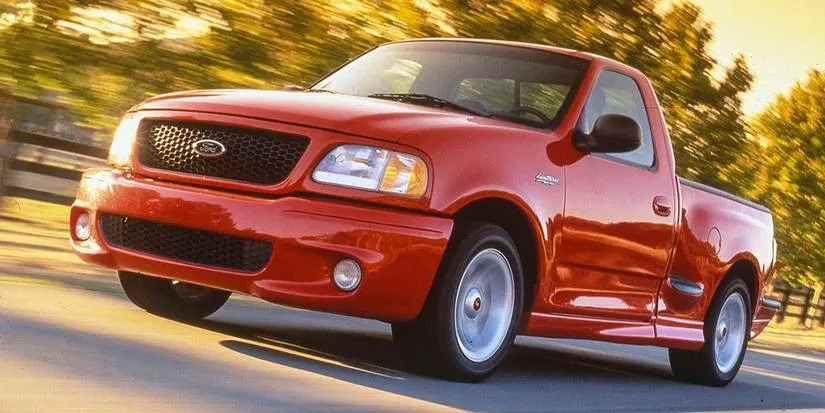
Ford decided to focus on the Raptor instead of the Lightning because customers seemed to like that model a lot more. The final SVT Lightning disappeared after the 2004 model year due to lackluster sales numbers. Car enthusiasts still believe that the last thing Ford wanted was a truck called Lightning that lacked the speed the name promised. Ouch. Even so, the Lightning editions were not slow. They had powerful engines, and the second generation especially could hustle. They just were not the absolute monsters that the badge implied. The truck promised thunder, delivered a respectable storm, and then quietly drove into the sunset.
Fast-forward to 2026. The Ford F-150 Lightning is now an electric truck, launched for 2022 and updated since. It can tow, it can haul, and it can make a gasoline V8 sound like a vintage gramophone. The old SVT Lightning, however, remains a fascinating chapter. It was not the fastest sport truck ever, but it had personality. It had a supercharger whine, a badge on the seats, and a suspension that tried its best. In a world of silent electric pickups, the original Lightning's rumble feels almost quaint. Almost.
Should Ford bring back the SVT Lightning? Many fans say yes. The Raptor got the glory, the electric Lightning got the future, but the original SVT Lightning got the coolest seats. That counts for something. In the end, the Ford F-150 Lightning was a truck that promised thunder, delivered a respectable storm, and then quietly drove into the sunset. Not a bad legacy for a pickup with a weather forecast for a name.
Comments