The landscape of superhero cinema is ever-changing, and by 2026, looking back, the journey of Black Adam's arrival on the big screen stands out as a pivotal, winding tale. In the late 2010s, the DC Extended Universe (DCEU) was a bustling hub of announced projects. Audiences had witnessed Wonder Woman and the Justice League, with Aquaman poised to make a splash. The slate was crowded with promised sequels and team-ups like Suicide Squad 2 and Green Lantern Corps, yet many languished in development purgatory. Films like The Flash and The Batman faced repeated setbacks, and the fate of a Man of Steel sequel grew increasingly uncertain. Yet, amidst this swirling uncertainty, perhaps the greatest enigma revolved around two figures: Shazam and his ancient rival, Black Adam. Originally, Shazam seemed the outlier, a project kept alive primarily by the immense star power and commitment of Dwayne "The Rock" Johnson, who was attached to portray Black Adam. But then, a seismic shift occurred that would redefine both characters' cinematic destinies: the announcement that Black Adam would headline his own solo film. This move, powered by The Rock's global appeal, was a masterstroke of franchise maneuvering, but it also plunged the classic hero Shazam into a deeper state of limbo. What did this mean for the DCEU's identity? Was this a bold step towards a new paradigm, or a sign of a universe struggling to find its footing?
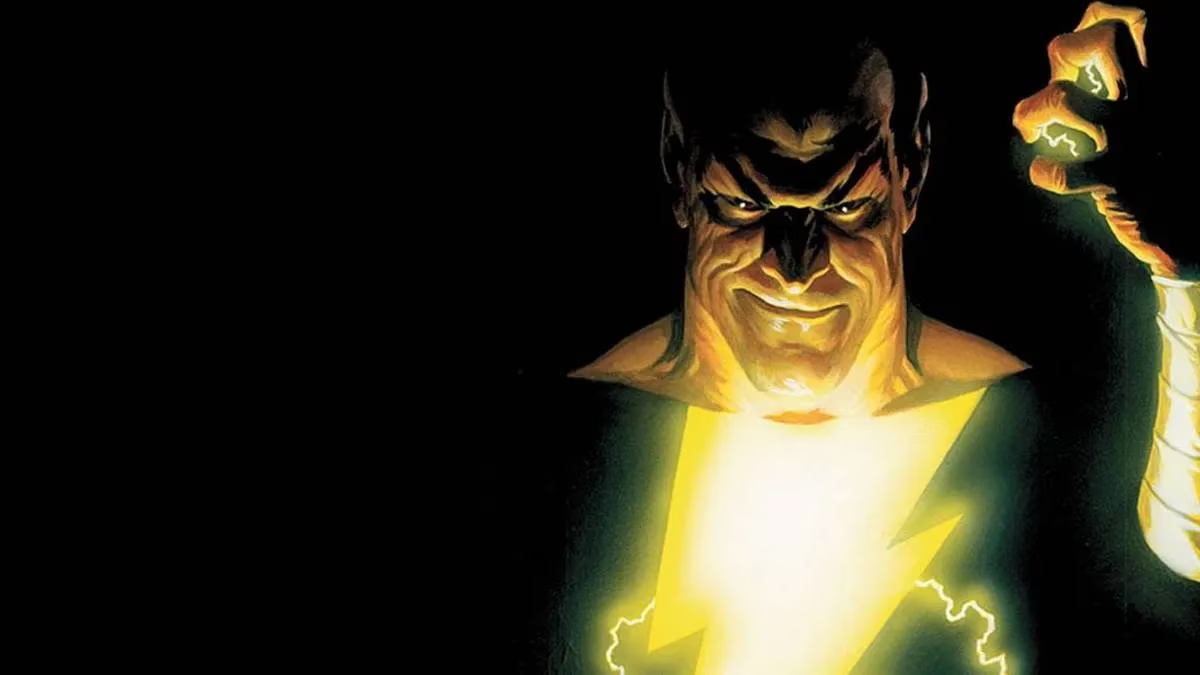
This decision naturally sparked a fundamental debate among fans: Is Black Adam a hero or a villain? The character's moral compass has never pointed to true north. In the comics, he has historically been a formidable rogue, a tyrant with immense power. Yet, Dwayne Johnson himself has consistently framed the character in a more nuanced light. In a video Q&A from that era, a fan pressed him on this very topic. Johnson's response was revealing and set the tone for his portrayal. He acknowledged the traditional mythology where Black Adam is a villain, or perhaps an antihero. But then, he pivoted to a personal interpretation, drawn deeply from the character's tragic origin. "I love the backstory that he started off as a slave and he was held down," Johnson explained. He spoke of a man rising from oppression, grappling with the profound pain of losing his family—a narrative he found dark, weighty, and compelling. His conclusion? "To me, he's a hero." This statement wasn't just actorly enthusiasm; it was a manifesto for the film's direction. It promised a protagonist forged in tragedy, whose methods might be ruthless, but whose core motivation stemmed from a place of profound loss and a twisted sense of justice. This alignment with complex, modern antiheroes like Deadpool or The Punisher suggested that DC was ready to explore grayer areas of morality. Could a character traditionally seen as a villain carry an entire blockbuster as its central, sympathetic figure?
The announcement of a Black Adam solo movie was a clear signal of DC's evolving strategy. Following the commercial success of Suicide Squad, which reveled in its villainous ensemble, the studio appeared more than willing to place antagonists—or complex figures like Black Adam—front and center. This was a deliberate move to carve out a distinct identity separate from the Marvel Cinematic Universe's more traditionally heroic focus. By 2026, we can see how this gamble aimed to offer audiences something different: darker mythologies, morally ambiguous champions, and stories where the line between justice and vengeance is thrillingly blurred. However, this strategy was not without its risks. Decoupling Black Adam from Shazam into two separate films raised serious questions about franchise management. The DCEU at the time was already a web of projects in various stages of disarray. Would adding another major solo origin story spread resources too thin? Could the universe sustain a compelling narrative when its classic hero-villain dynamic was bifurcated from the start? Some feared this fragmentation could lead to further instability, while others hoped it would allow each character the space to develop a rich, standalone mythology.
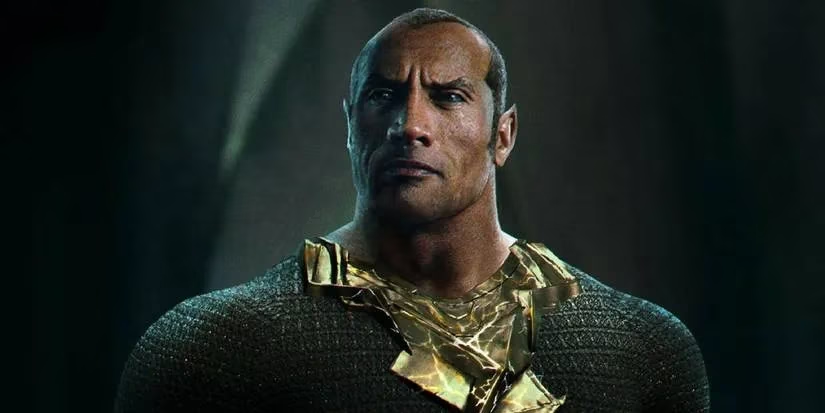
Reflecting from 2026, the path of Black Adam highlights several key themes in modern blockbuster filmmaking:
-
The Power of Star-Driven Development: Dwayne Johnson's involvement was the engine for this project. His vision and popularity essentially willed a solo film into existence.
-
The Rise of the Antihero: Audiences' appetite for flawed, ruthless protagonists has grown, making space for characters like Black Adam to headline.
-
Franchise Growing Pains: The DCEU's struggle to cohesively manage its sprawling slate was emblematic of the challenges facing shared cinematic universes.
Ultimately, the promise of Black Adam was immense. It offered a story ripe with conflict, tragedy, and power—a tale of a fallen champion seeking redemption on his own harsh terms. The Rock's portrayal promised to be a physical and charismatic tour de force. Fans were, and remained, eager to see him finally wield the lightning. The question was whether the film could successfully balance its ambitious tone, serve its complex lead character, and find a stable place within—or perhaps outside—the ever-evolving DC cinematic landscape. As history shows, sometimes the most compelling stories come not from the shining paragons of virtue, but from those who dwell in the shadows, wrestling with their own demons and definitions of justice. Black Adam was poised to be exactly that kind of story.
Comments