As I sit here in 2026, controller in hand, the digital worlds I inhabit often feel more real than the one outside my window. Yet, my mind drifts back to a decade ago, to the grand, messy, and deeply human experiment that was the DC Extended Universe. In a gaming landscape obsessed with perfect balance and predictable power-ups, the DCEU was that unpatched, ambitious mod—flawed, controversial, but pulsing with a raw, undeniable soul. It didn't just want to entertain; it wanted to mean something, even when it stumbled over its own cape. Let me tell you, from one digital wanderer to another, why that messy heart still beats so loudly for me.
The Architects & The A-List Cast
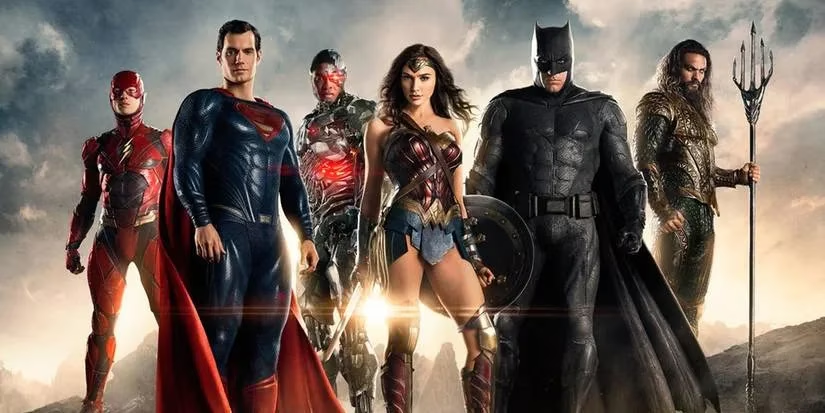
Warner Bros. and DC Films didn't just hire hands; they summoned visionaries. It was like watching a developer gather a dream team for the ultimate open-world RPG. Zack Snyder was our lead designer, painting with a palette of mythic sorrow. David Ayer brought the gritty, punk-rock side mission energy with Suicide Squad. Patty Jenkins, James Wan, Doug Liman—each was handed a iconic character and told to build their world. And the voice cast? Good grief, it was stacked. From Ben Affleck's world-weary Batman, a veteran player carrying the scars of a hundred failed campaigns, to Gal Gadot's Wonder Woman, whose very presence felt like a buff to your party's morale. They weren't just actors; they were avatars for our collective hopes.
The Soundtrack: More Than Background Noise
In most superhero games—er, movies—the music is just ambiance. Not here. The DCEU treated its score like a core gameplay mechanic. Hans Zimmer and Junkie XL didn't just make themes; they crafted emotional cores. Superman's theme wasn't just fanfare; it was the sound of hope struggling to breathe, a delicate piano line amidst thunderous percussion. Batman's suite? That was the dark, rhythmic soundtrack to a stealth mission gone tragically wrong, all pounding drums and mournful strings. And Suicide Squad? That was the ultimate "driving to the final boss" playlist, a chaotic, glorious mixtape that made you feel invincible even when your team was falling apart. It gave the whole universe a heartbeat you could feel in your chest.
A World Built With Painterly Care
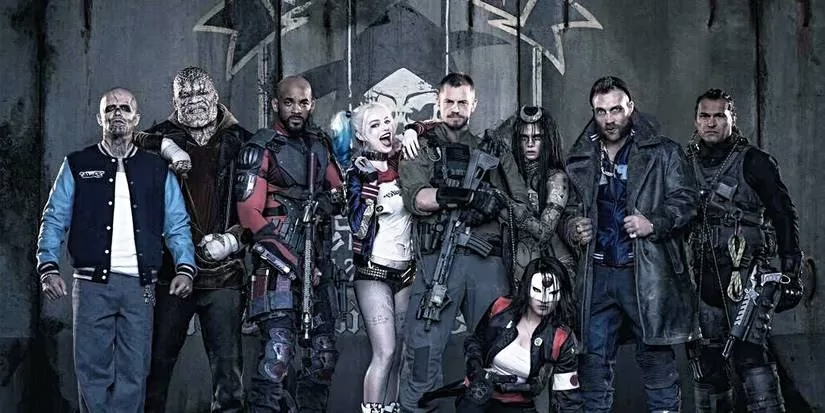
Every frame felt like a concept art page come to life. This wasn't just set design; it was world-building on a Tolkien-esque scale. They moved beyond the neon spandex of earlier eras and gave us a Gotham that smelled of rain and regret, a Metropolis that gleamed with cold ambition. Batman's suit wasn't cloth; it was tactical armor, etched with the memory of every blow. Superman's was Kryptonian heritage, a family crest woven into alien fabric. And Suicide Squad's aesthetic? Pure, unadulterated style-overload, a visual riot that felt like stepping into a graphic novel someone spilled a neon paint can on. It was a universe you wanted to inhabit, to explore every rain-slicked alley and sun-drenched alien beach.
The Grown-Up in the Room
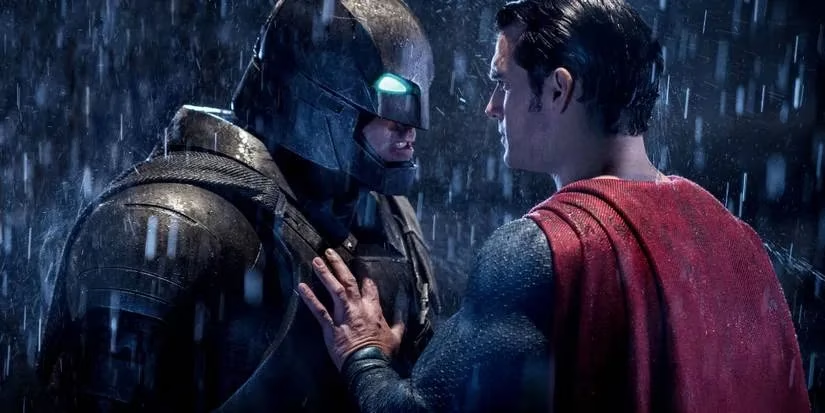
Let's be real: by 2016, the superhero genre was getting... comfortable. Predictable. The DCEU threw a wrench into that. It dared to be an adult. It asked what a god among men would really do to our politics, our fear. It gave us a Batman haunted past the point of brooding—he was broken, and his quest for justice felt more like a vendetta. The humor was scarce, the colors were often drained, and the themes weighed a ton. It was a mood, man. A heavy, contemplative mood that didn't apologize for making you think. Suicide Squad tried to lighten it with jokes, but even its laughs felt coated in grime. It was a risk, and honestly? I respected the heck out of it.
Zack Snyder's Cinematic Playground
Say what you will about the man's plots, but the dude knows how to craft a screenshot-worthy moment. Snyder's direction was pure spectacle. In Man of Steel, he made Superman's flight feel less like a power and more like a spiritual awakening, the camera struggling to keep up with his grace. Then, in Batman v Superman, he went full gothic opera. Every slow-motion shot, every perfectly composed frame in the rain, felt like a painting about to bleed. It was cinematic in the oldest, grandest sense. David Ayer matched that energy with Suicide Squad, directing with the frenetic, sexy danger of a first-person shooter highlight reel. These films looked like the epic cutscenes we wished our games had.
Everything is Connected (And It Hurts So Good)
The connectivity wasn't just post-credit teasers. It was woven into the narrative DNA. Bruce Wayne's rage was born from the ashes of Metropolis, a direct consequence of Man of Steel's finale. Superman's death directly led to the formation of the Suicide Squad. A photo in a file teased a solo movie. It felt like a sprawling, ongoing narrative where every action had a reaction. For a gamer used to quest lines intertwining, it was... chef's kiss. It made the world feel alive, consequences real, and the stakes genuinely cosmic.
A History You Can Feel
The genius move? Starting in media res. We didn't need another origin story for Batman. We met him as a veteran, twenty years into a war he's already lost in some ways. The Joker had already killed Robin—that suit, defaced in the Batcave, was the most powerful piece of environmental storytelling I'd ever seen. Alfred wasn't just a butler; he was a co-op partner, a strategist. This universe had a past, a lore you could feel in the rust on the Batmobile and the scars on the characters. It granted a depth and a tragedy that made every victory feel earned and every loss resonate deeper.
Unleashing the Mythos
Previous DC films played it safe, ground-level. The DCEU threw open the gates to the weird and wonderful. It promised us Themyscira, Atlantis, the New Gods. It introduced magic with the Enchantress and teased cosmic horrors like Steppenwolf. This was the promise of exploring the full, glorious scope of the DC library—from street-level crime to mythological epic to cosmic saga. For a fan, it was the ultimate promise: that no part of this beloved universe was off-limits.
A Reflection of Our World
In an era that desperately needed it, the DCEU made strides to look like the real, diverse world. It gave us heroes and characters of color in central roles—Cyborg, Katana, El Diablo—and boldly reimagined others, like Jason Momoa's Aquaman. Most importantly, it gave us Wonder Woman, our first solo female superhero film in this modern era, directed by a woman. It wasn't perfect, but it tried. In an industry (and a gaming world) often critiqued for its homogeneity, that effort mattered.
The Cult of the Flawed Masterpiece
And this, perhaps, is the heart of it. The DCEU became a cult phenomenon. It fostered a community not of passive viewers, but of active defenders, analysts, and debaters. We pored over every frame, argued every theme, found hidden meanings in the cracks. The films demanded engagement. They were conversation starters, art to be wrestled with. They were the video game with the infuriating, brilliant difficulty curve that you can't stop talking about. A decade later, that conversation hasn't died. It evolved. The DCEU, in its bold, fractured beauty, taught me that sometimes the most rewarding worlds aren't the perfectly polished ones, but the ones brave enough to have scars, to ask hard questions, and to wear their heart, however heavy, on a brightly colored sleeve. It was a gamble, a glorious, messy, heartfelt gamble—and I'm forever glad they rolled the dice.
Comments