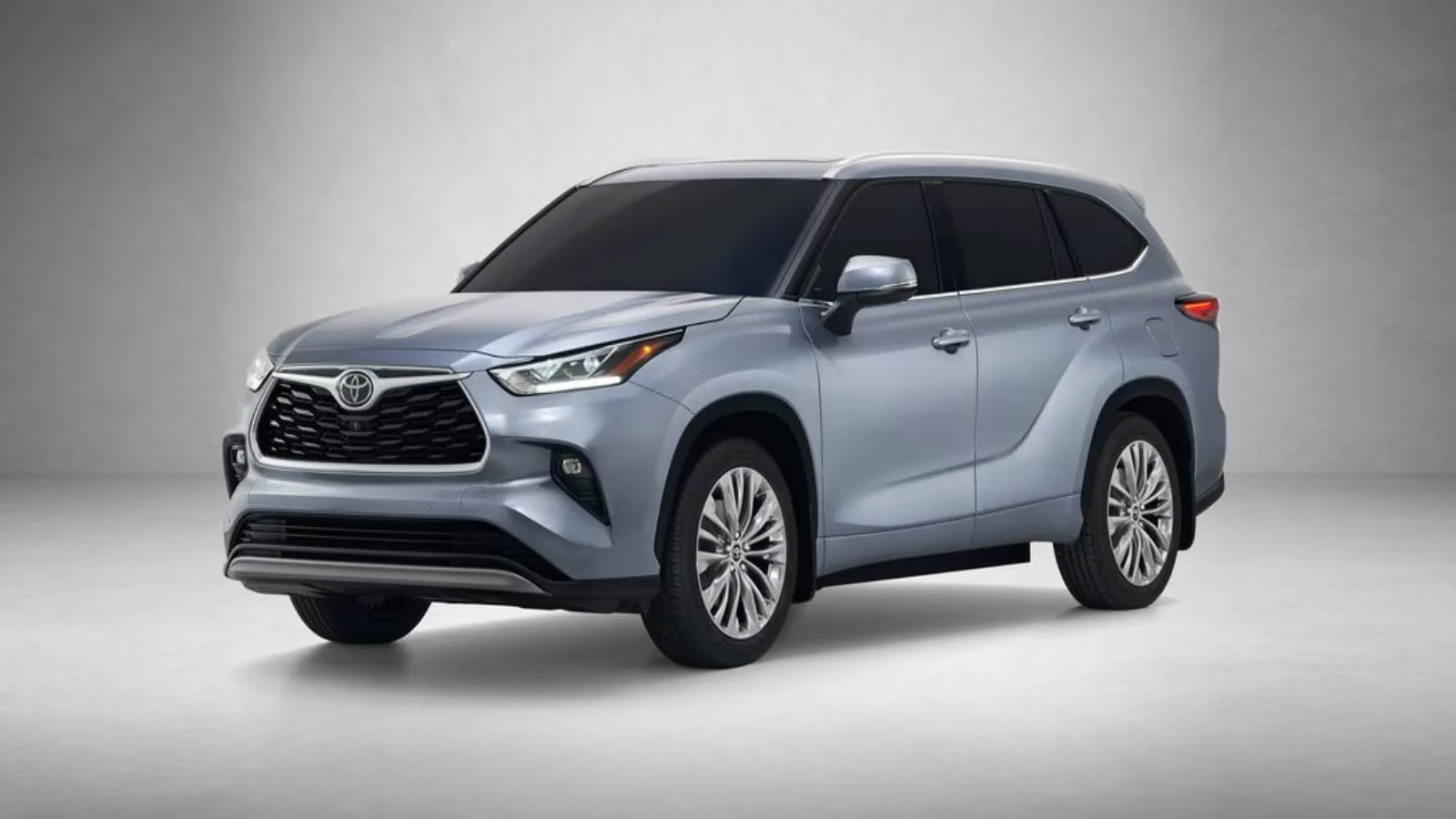
The 2026 Toyota Highlander arrives in showrooms carrying a whisper of controversy—a price tag that climbs higher than many family buyers anticipate. Yet, like a grand cathedral door that seems heavy until you step inside, the initial resistance quickly gives way to an appreciation of the space, light, and craftsmanship beyond. In an era where three-row SUVs battle for suburban supremacy, the Highlander’s latest iteration positions itself not merely as transport but as a rolling sanctuary that insulates its passengers from the chaos of fragmented freeways like a bank vault on wheels.
A Legacy of Steady Climbing Figures
The Highlander’s pricing arc over the past six years tells a story of relentless refinement. In 2019, a base model could be had for around $32,950. The 2020 redesign bumped that figure to $35,720, a $2,770 leap that felt significant at the time. Fast forward to 2026, and the entry L trim now starts at $40,250—a cumulative ascent that mirrors the rising cost of advanced safety systems, electrification, and in-cabin intelligence. The range now crests with the Platinum AWD hybrid at $55,880, a realm previously occupied by entry-level luxury marques. This pricing strategy no longer competes solely with the Honda Pilot and Chevy Traverse; it brushes shoulders with the Acura MDX and Infiniti QX60, redefining what a mainstream nameplate can demand.
Powertrain: Refined Strength Meets Electrification
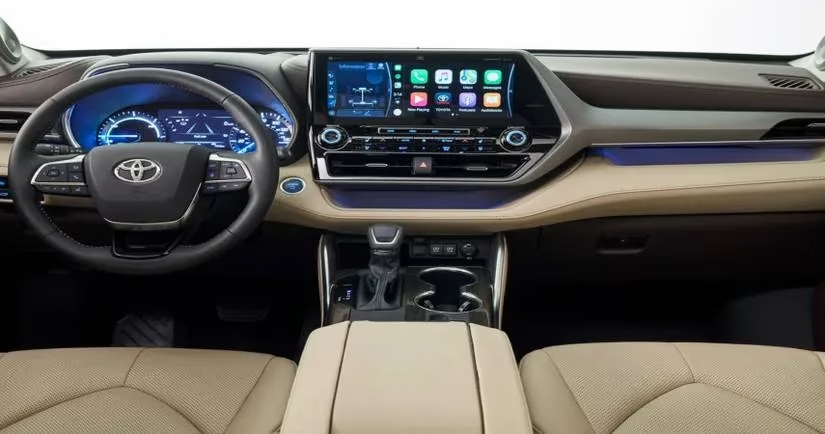
The 2026 Highlander bids farewell to the venerable 3.5-liter V6 altogether, a decision as transformative as replacing a well-worn leather glove with a smart-enabled one. In its place, Toyota deploys a pair of electrified choices that form the backbone of its “Beyond Zero” vision. The standard setup is a 2.4-liter turbocharged inline-four, paired with an 8-speed automatic, delivering 265 horsepower and a broad torque plateau that makes merging onto highways feel effortless—like a bespoke tailor adjusting a suit, everything just fits. For those seeking the pinnacle of efficiency and quietness, the Hybrid Max system combines a 2.4-liter turbo engine with front and rear electric motors, churning out a combined 362 horsepower. The transition between electric and gasoline power is as unobtrusive as a whisper in a hurricane, seamlessly toggling while the accelerator pedal remains a mere suggestion of intent. Front-wheel drive remains standard on lower trims, while a sophisticated all-wheel-drive system with dynamic torque vectoring is available to lend confidence on rain-slicked asphalt or gravel pathways.
Interior: A Mobile Lounge with Tech to Match
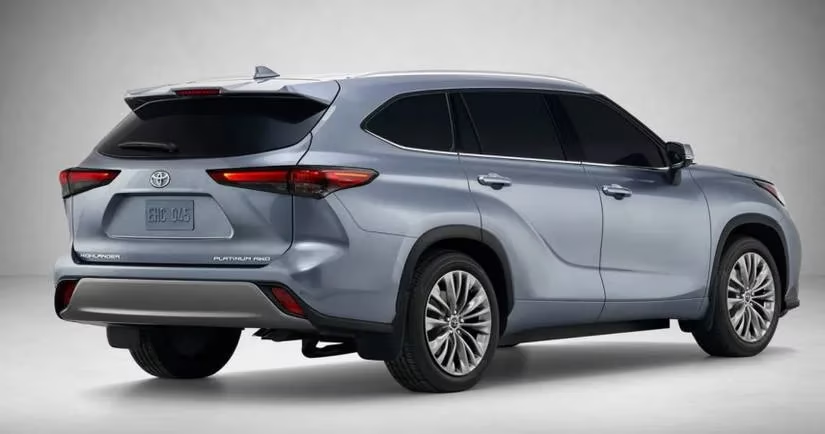
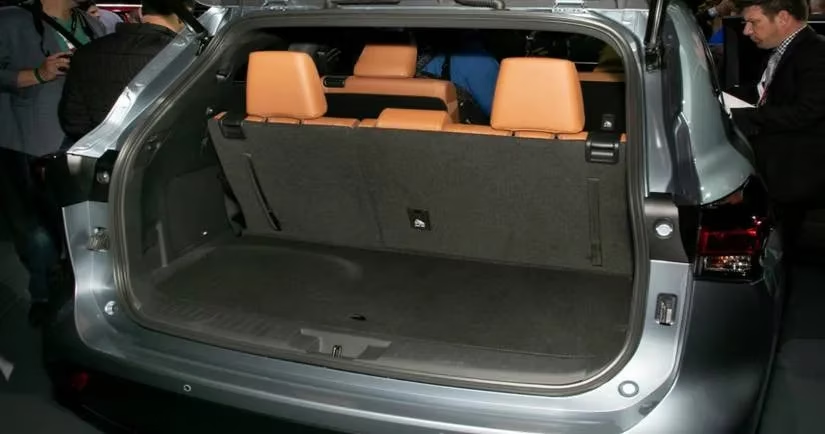
Slide into the 2026 Highlander’s cabin, and the evolution becomes tactile. Soft-touch surfaces extend to the third row, a rarity in this segment, and the available 12.3-inch infotainment screen floats above the dash like a digital painting. Toyota’s latest Safety Sense 3.0 suite is omnipresent, bundling adaptive cruise control, lane tracing, and a pre-collision system that feels less intrusive than previous generations. The second-row captain’s chairs now offer a one-touch fold feature, transforming the cavernous space into a cargo hold that can swallow a bicycle without removing its front wheel. Even with all seats upright, there’s meaningful storage behind the third row—a feat of packaging that echoes a master origami artist folding complexity into a simple, elegant form.
The Price of Progress
Comparing the 2026 Highlander’s value proposition to its ancestors is instructive. The table below illustrates how key trims have inched upward while adding content that was once reserved for luxury vehicles:
| Trim Level | 2020 MSRP | 2026 MSRP | Notable Additions |
|---|---|---|---|
| L (base) | $35,720 | $40,250 | Standard Toyota Safety Sense 3.0, 2.4L turbo, wireless CarPlay |
| XLE | $39,600 | $44,900 | Synthetic leather, heated front seats, power tailgate |
| Platinum AWD | $49,370 | $55,880 | Hybrid Max powertrain, semi-aniline leather, head-up display |
These numbers may induce a sharp intake of breath, but the driving experience dissolves much of the sticker shock. The hybrid model, in particular, returns up to 36 mpg combined—a figure that, over five years of ownership, can recoup a sizable fraction of the premium. Toyota’s confidence is rooted in a simple calculus: families are willing to pay for a vehicle that cocoons them in quiet competence, and the 2026 Highlander delivers that sanctuary with a maturity that feels worth the tariff.
Final Mile
Paying more for a familiar name can feel like an exercise in frustration until the key fob lands in your palm. The 2026 Toyota Highlander may cost more than its predecessor, but it also offers more—more serenity, more technology, and more confidence that the journey to soccer practice can be a first-class affair. For those who view a family hauler not as an appliance but as a partner in daily life, the price of entry begins to look less like a burden and more like the cost of a well-measured investment in stress-free mobility.
Comments