The DC Extended Universe (DCEU) has been a major force in Hollywood for over a decade now, but as we look towards 2026, some fundamental challenges from its inception still cast a long shadow. While films like The Batman (2022) and Aquaman and the Lost Kingdom (2023) found success, the overall trajectory of the shared universe has been rocky. The core issues identified years ago—comparisons to Marvel, narrative pacing, and tonal consistency—continue to be relevant talking points for fans and critics alike.
1. Living in Marvel's Colossal Shadow 😓
Let's be real: the Marvel Cinematic Universe (MCU) didn't just set the bar; it built the entire stadium. By 2026, the MCU has expanded into a multimedia behemoth with over 40 films, numerous series, and special presentations. Every DCEU project, whether it's a new Justice League film or a solo outing like Supergirl: Woman of Tomorrow, is inevitably measured against Marvel's track record. This comparative lens can overshadow a film's individual merits, making it harder for DC stories to be judged on their own terms. It's an uphill battle for audience mindshare in a post-Avengers: Endgame world.
2. The Novelty Has Worn Off
Remember the sheer event hype around the first Avengers? That "they're all here!" magic was a once-in-a-generation cinematic moment. By the time the DCEU's first major team-up, Justice League, arrived, the concept of a shared universe was standard operating procedure. In 2026, with multiple studios attempting their own cinematic universes (some successfully, many not), the marketplace is beyond cluttered. Standing out requires more than just assembling heroes; it requires a unique and compelling reason to exist. The DCEU sometimes struggles to define that unique selling proposition beyond being "darker" than Marvel.
3. The Big-Screen-Only Limitation 📺
One of the MCU's greatest strengths has been its interconnected tapestry across film and television (even with some recent continuity hiccups). The DCEU, however, has largely remained siloed on the big screen, while DC television properties like Superman & Lois or the now-concluded Titans operate in their own separate worlds. This creates a confusing landscape for casual fans. Which Flash is this? Is this the same Superman? This fragmentation prevents the kind of deep, serialized character development that TV allows and dilutes the "shared universe" promise, making the world feel smaller, not larger.
4. The Long, Long Wait Between Sequels ⏳
Patience is a virtue, but cinematic momentum is a necessity. Marvel has historically kept its core heroes on a relatively tight 2-3 year sequel schedule. The DCEU, however, has seen massive gaps. Fans waited nearly a decade for another Henry Cavill-led Superman film (which ultimately didn't materialize as planned). While characters appear in each other's movies, a supporting role in Black Adam is no substitute for a dedicated sequel. These long pauses can cause audience interest to wane and make it difficult to maintain a coherent, ongoing character arc across years.
5. The Burden of Iconic Legacies
Everyone has an idea of what Superman or Batman should be. These are some of the most recognizable fictional characters on Earth, with decades of film and TV history. This creates immense baggage. Casting choices (remember the Ben Affleck backlash?) and directorial interpretations are scrutinized to a microscopic level. Marvel had the advantage of introducing lesser-known heroes like Iron Man, allowing them to define the character for the big screen without as many preconceived notions. For DC, every creative decision is a high-wire act over a sea of fan expectations.
6. The "Grounded" Tone vs. Fantastical Elements
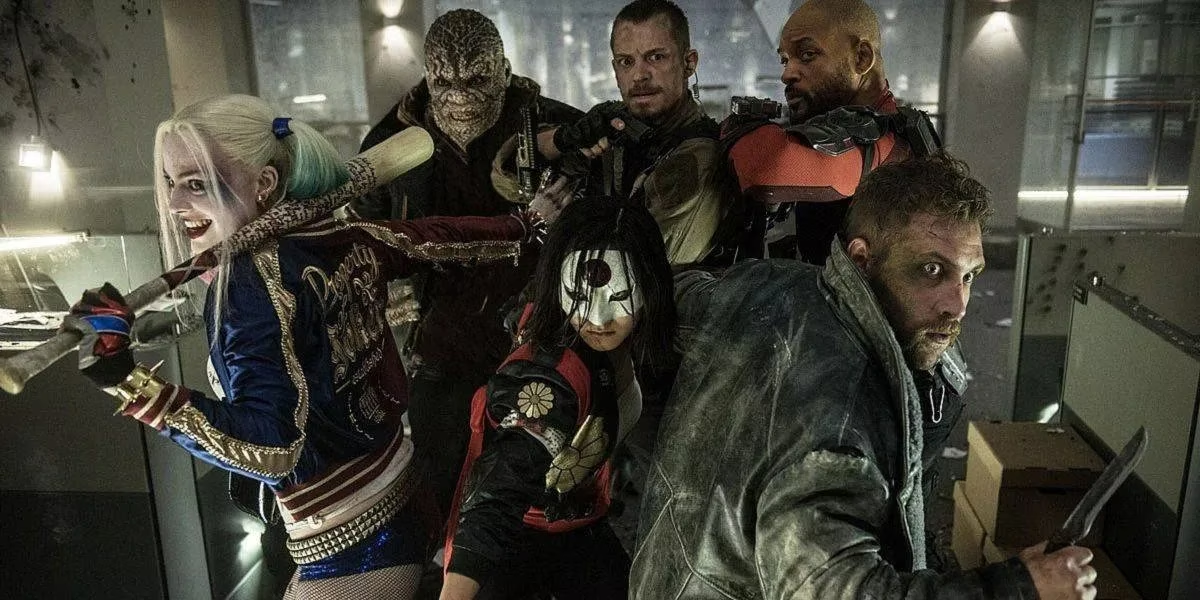
The DCEU's foundational aesthetic was heavily influenced by the gritty realism of Christopher Nolan's Dark Knight trilogy. This created a tonal conflict when introducing inherently fantastical elements. The jump from the world-shattering alien in Man of Steel to a sorceress like The Enchantress in Suicide Squad was jarring. Marvel eased audiences from tech-based Iron Man to cosmic gods like Thor over many films. The DCEU's compressed timeline forced audiences to rapidly adjust to wildly different power scales and mythologies, which could feel tonally inconsistent.
7. Too Much, Too Soon: The Crammed Narrative
Batman v Superman: Dawn of Justice tried to do in one film what Marvel took multiple phases to build: introduce Batman, Wonder Woman, Lex Luthor, Doomsday, and tease the entire Justice League. It was narrative overload. This "cramming" approach risked confusing casual viewers and left little room for organic character development. It echoed the criticism of Iron Man 2, which was seen as an extended trailer for The Avengers rather than a focused sequel. Even in 2026, new DCEU projects can sometimes feel burdened by the need to set up the next thing rather than tell a complete story.
8. Starting in Media Res: Missing the Origin Journey
A huge part of the superhero genre's appeal is the origin story—the transformation from ordinary to extraordinary. The DCEU often skipped this. We met a weary, veteran Batman and a battle-hardened Wonder Woman right out of the gate. While Wonder Woman (2017) later delivered a fantastic origin via flashback, it created a disjointed timeline. For other characters, like the Flash or Aquaman in their initial team-up appearances, key aspects of their motivations and histories were glossed over, requiring audiences to fill in the blanks or do homework. This lack of a shared starting point can make it harder for audiences to emotionally invest in the journey.
9. The Backwards-Jumping Timeline Puzzle
The DCEU's narrative structure has been... nonlinear, to put it mildly. After meeting present-day Wonder Woman in BvS, we jumped back to World War I for her solo film. The Aquaman sequel explored ancient mythology, while The Flash (2023) played with multiversal time travel. For the average moviegoer, keeping track of when each story takes place relative to others can feel like a part-time job. This arbitrariness can undermine narrative momentum and make the universe feel less like a cohesive story and more like a collection of isolated episodes with no clear chronological through-line.
10. The Monolithic Gritty Tone
For years, the DCEU was synonymous with a specific aesthetic: desaturated colors, brooding heroes, and a generally somber mood. While this distinguished it from Marvel's quippier fare, it also created a lack of tonal variety. If Superman, Batman, and the Squad are all gritty, where's the contrast? Marvel successfully blended genres—space opera (Guardians), political thriller (Winter Soldier), comedy (Ant-Man). The DCEU's later course-correction into more hopeful territory (e.g., Shazam!) was welcome but sometimes felt disconnected from the earlier, darker foundation. This tonal whiplash remains a challenge for the brand's identity in 2026.
So, what's the verdict as we move deeper into the 2020s? 🤔 The DCEU has proven it can deliver standout individual films. However, the foundational pressures of competing with Marvel's legacy, managing iconic characters, and crafting a coherent long-term vision continue to be its greatest hurdles. The universe's success will depend on learning from these past challenges—embracing tonal diversity, prioritizing character-driven stories over sprawling setups, and forging a unique identity that isn't just a reaction to what came before. The battle for superhero supremacy isn't over, but the path forward requires more than just power; it requires a clear, compelling direction.
Comments